Croatia: The Dalmatian Islands
We explored Croatia’s Dalmatian coast and islands on a weeklong guided cycling tour with VBT (Vermont Bike Tours). The itinerary combined moderate daily rides with visits to historic villages, coastal scenery, and opportunities to experience regional food and wine. Distances were manageable and typically followed quiet secondary roads, allowing time for sightseeing, café stops, and swims in the Adriatic.
The route included several of Croatia’s most scenic islands, with rides through vineyards, olive groves, limestone villages, and along dramatic coastal roads overlooking the Adriatic Sea. Ferry transfers between islands added variety and constantly changing scenery.
Why We Chose It
Croatia had been on our radar for several reasons. The Dalmatian coast is widely regarded as one of Europe’s most beautiful coastal regions, with hundreds of islands scattered across the deep blue Adriatic. The historic towns feature Venetian-influenced stone architecture, narrow lanes, and small harbor squares that feel distinctly Mediterranean.
Compared with destinations such as Italy or southern France, Croatia also offered the appeal of being somewhat less crowded and more affordable, while still providing excellent food, welcoming locals, and strong tourism infrastructure.
Cycling proved to be an ideal way to experience the islands. Distances between towns are short, traffic is generally light outside major centers, and the terrain alternates between gentle coastal riding and scenic climbs that reward riders with sweeping views of the sea.
Equally appealing was Croatia’s food and wine culture, which reflects both Mediterranean and Central European influences—fresh seafood, grilled meats, olive oil, local cheeses, and regional wines produced from indigenous grape varieties.
Overall, the trip offered a combination of active travel, coastal scenery, historic towns, and excellent cuisine, making it one of the most memorable ways to experience the Dalmatian islands.
Itinerary
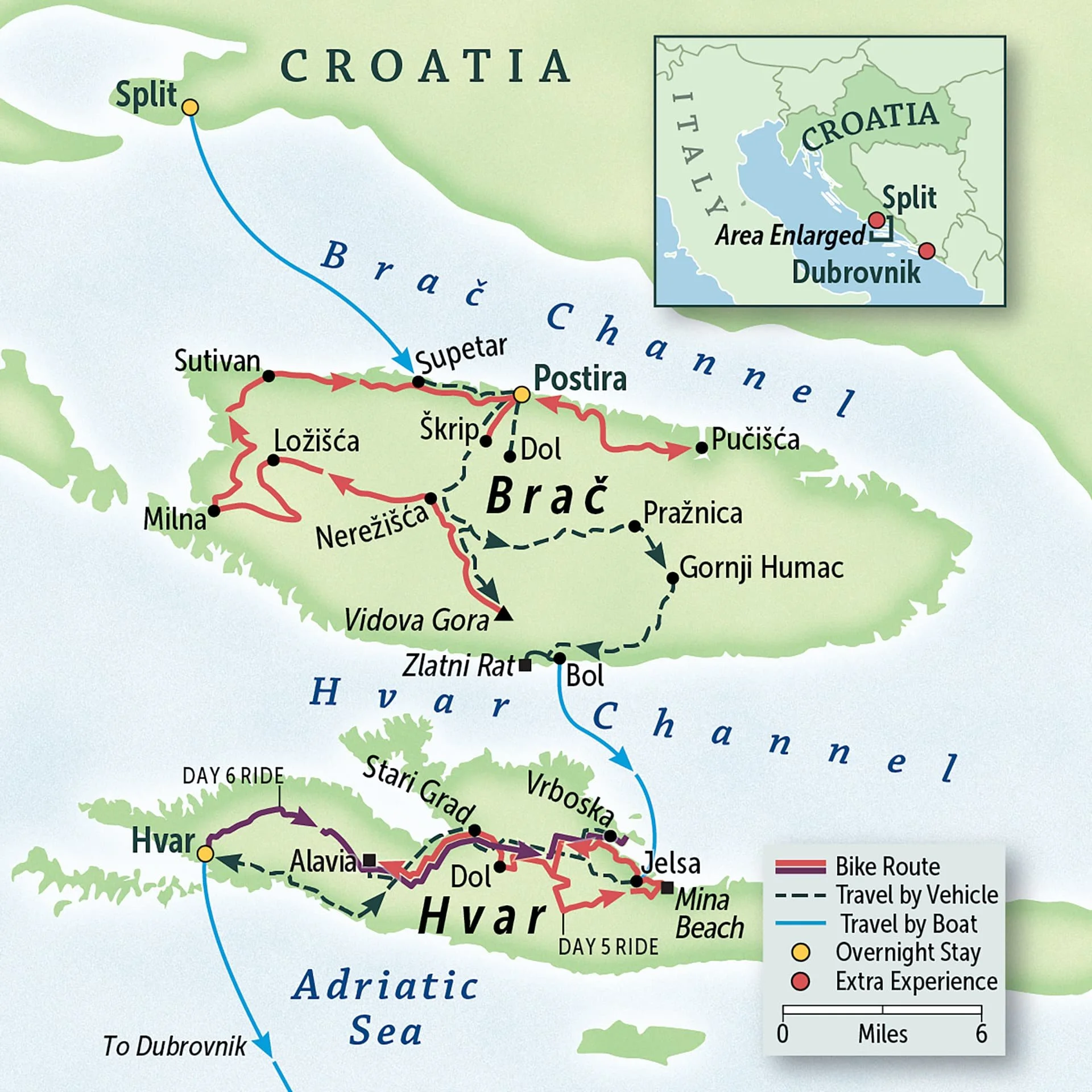
The itinerary blends cycling, island-hopping ferries, historic towns, and Adriatic coastal scenery, with guided cultural experiences and meals featuring regional Croatian cuisine.
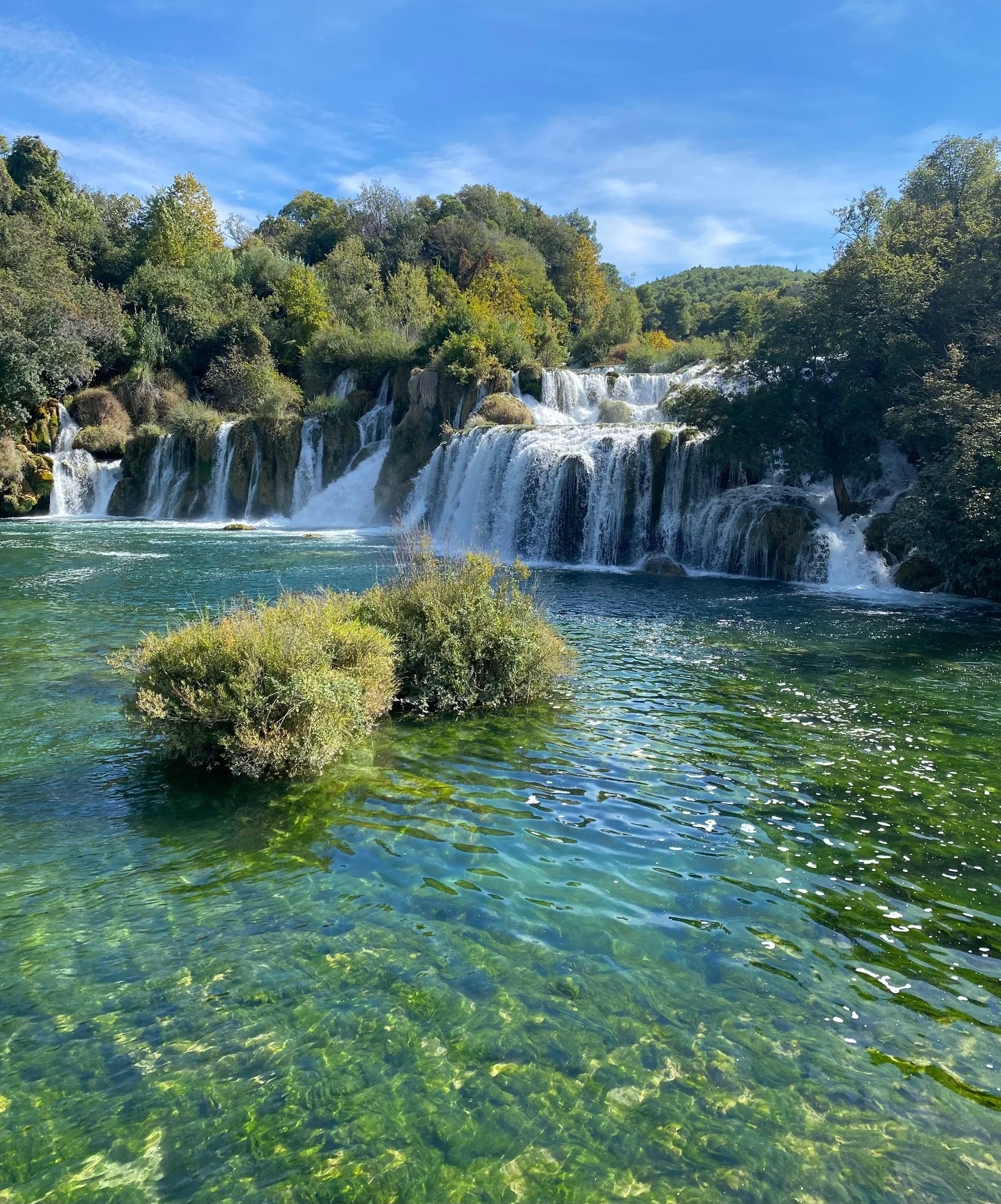
Day 1 - Arrival into Split. Day trip to Krka National Park to see the famous Skradinski Buk waterfall.
Day 2 — Split to Brač Island. Ferry to the island of Brač and settle into a seaside village for the first three nights.
Day 3 — Brač coastal ride. Cycle along Brač’s scenic north coast through small villages such as Škrip and Pučišća, known for its white limestone quarries. Coastal roads provide views of the Adriatic.
Day 4 — Vidova Gora and island villages. Shuttle uphill to Vidova Gora, the highest point in the Adriatic islands, then take a thrilling downhill ride through rural villages to the harbor town of Milna.
Day 5 — Brač Island to Hvar Island. Travel across Brač to Bol and visit Zlatni Rat (Golden Horn) beach. Later, ferry to the island of Hvar and settle into the historic harbor town for the next three nights.
Day 6 — Hvar countryside cycling. Ride through vineyards, lavender fields, and traditional villages on Hvar, with views of the Adriatic and stops in small coastal towns.
Day 7 — Hvar exploration and coastal riding. Cycle across the island, including quiet rural roads and historic settlements such as Stari Grad and Jelsa, with time to explore the waterfront towns.
Day 8 — Ferry to Dubrovnik. Take ferry to Dubrovnik, a picturesque coastal city made famous by the Game of Thrones series.
Day 9 - Depart from Dubrovnik
Split, Croatia
Why We Chose It: Split is a logical mainland starting point prior to island hopping. The city combines a lively waterfront with one of the most unusual historic centers in Europe—an entire old town built within the walls of Diocletian’s Palace, a Roman complex dating to the 4th century.
Lodging: A small guesthouse inside the old town. Unfortunately we neglected to record the name and didn’t take photos.
Atmosphere: Quaint and intimate. The building had a labyrinthine layout with narrow staircases and stone corridors, typical of accommodations carved into centuries-old structures within the palace walls.
Room Notes: Small but comfortable, with plenty of local character.
Memorable Activities
Day trip to Krka National Park to see the famous Skradinski Buk waterfall.
Wandering the ancient stone streets of Diocletian’s Palace, polished smooth by centuries of foot traffic.
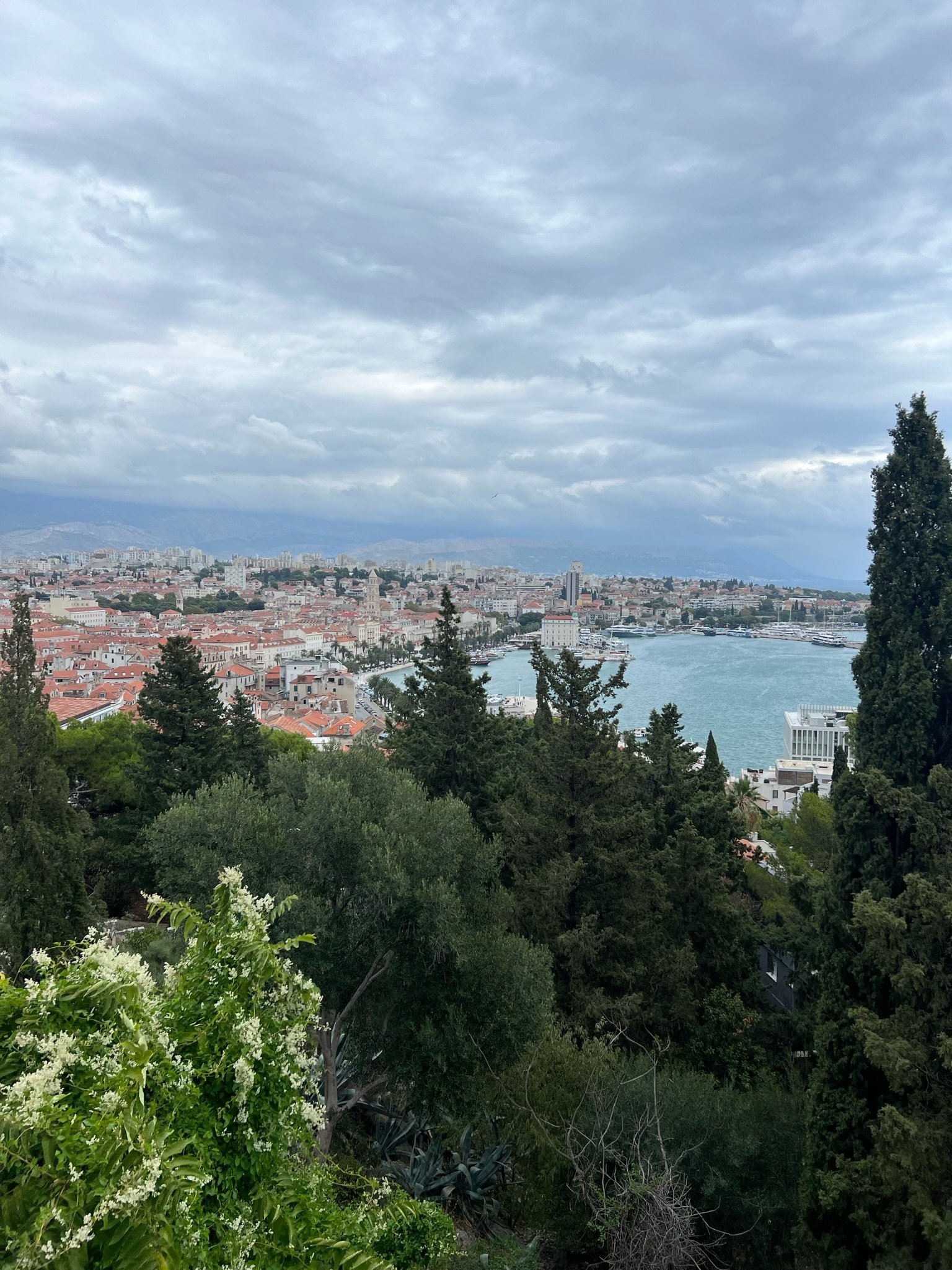
Hiking up Marjan Hill through old cemeteries and forest paths for a panoramic view of the harbor and islands.
A virtual reality historical tour that reconstructs how the Roman palace once looked.
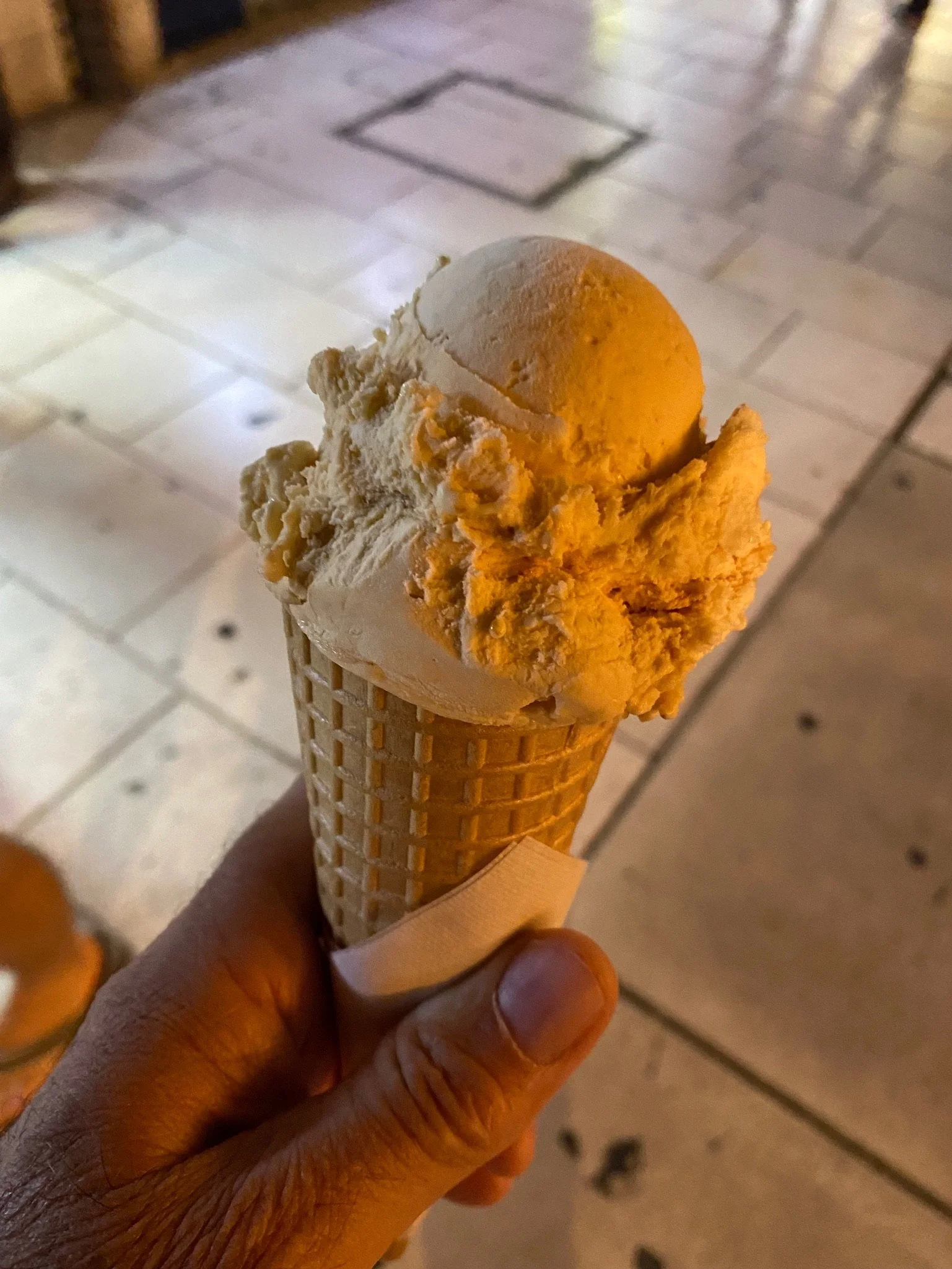
Food Notes: Daily quest for the best gelato. Italy is just across the Adriatic, and the influence shows.
Brač, Croatia
Why We Chose It: Brač is one of the largest islands in the Dalmatian archipelago and is known for its clear Adriatic waters, traditional stone villages, and scenic coastal cycling routes. The island is also famous for its white limestone, historically used in buildings across the region, and for Zlatni Rat, one of Croatia’s most recognizable beaches. Its mix of quiet villages, rural landscapes, and coastal views made it a natural stop on our island-hopping cycling itinerary.
Lodging. Hotel Pastura, located directly on the harbor in the village of Postira, served as our base. The hotel occupies a prime waterfront location within easy walking distance of the village center and marina.
Atmosphere: Polished and modern with large windows and terraces that take full advantage of the harbor and Adriatic views. The setting felt relaxed and uncrowded, particularly compared with some of the larger resort areas on the island.
Room Notes: Comfortable, good-sized rooms with functional layouts. Décor was simple and contemporary rather than distinctive.
Memorable Activities
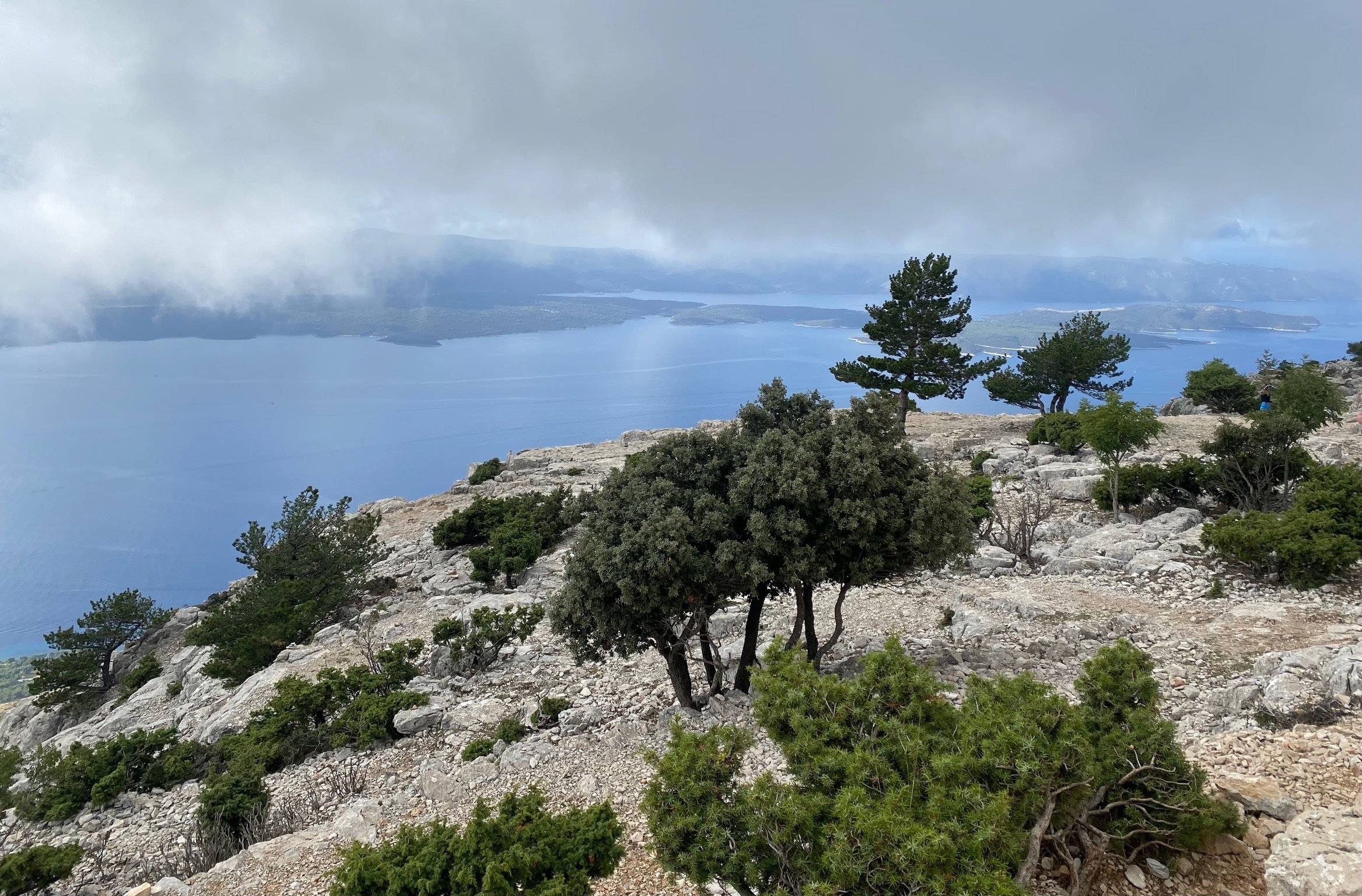
Riding to Vidova Gora, the highest point in the Adriatic islands, with sweeping views over Brač and neighboring islands.
Visiting Zlatni Rat, the famous “Golden Horn” beach near Bol, whose narrow spit of white pebbles shifts depending on currents and wind.
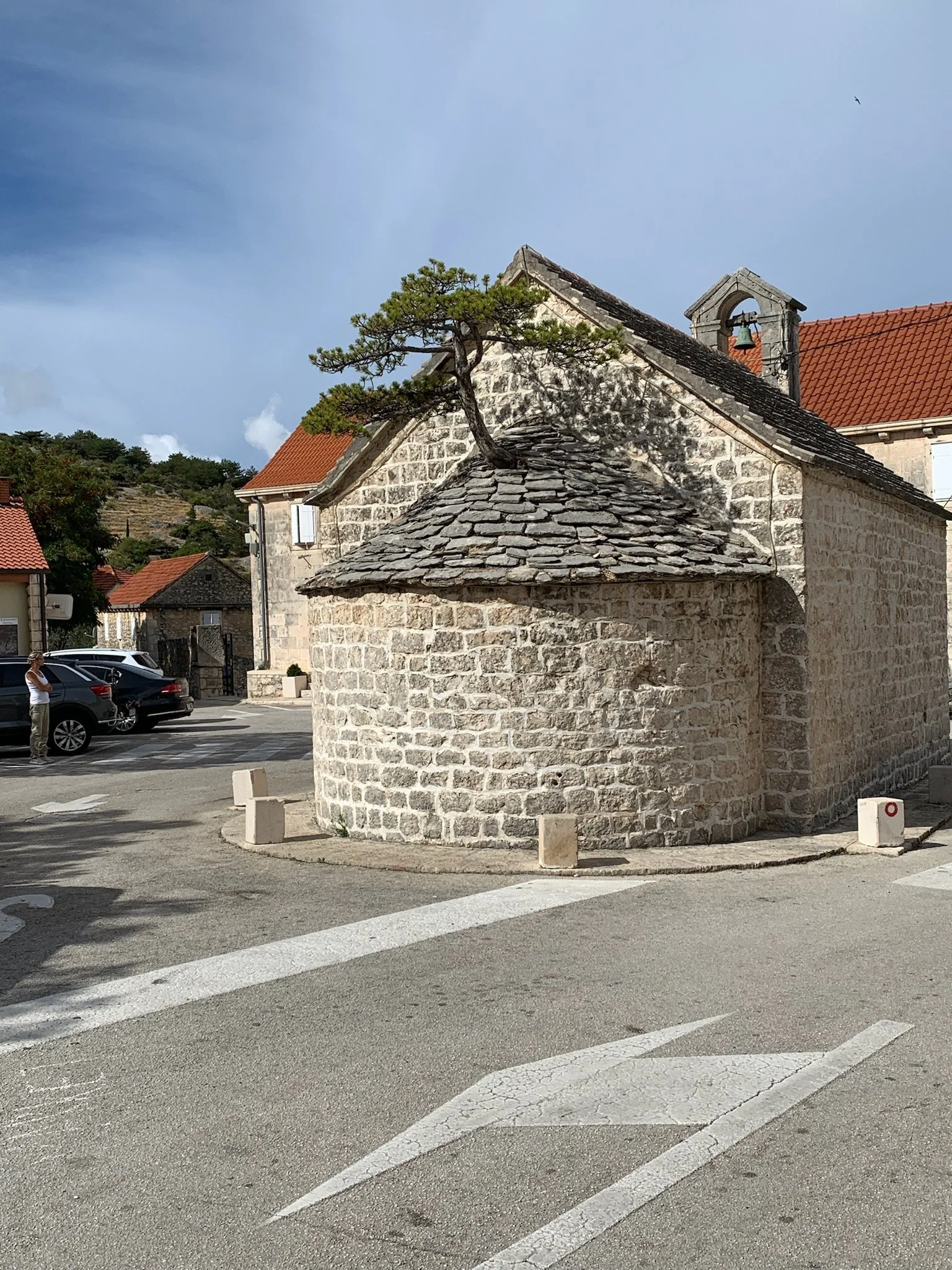
Cycling through small villages and olive groves along the island’s quiet interior roads.
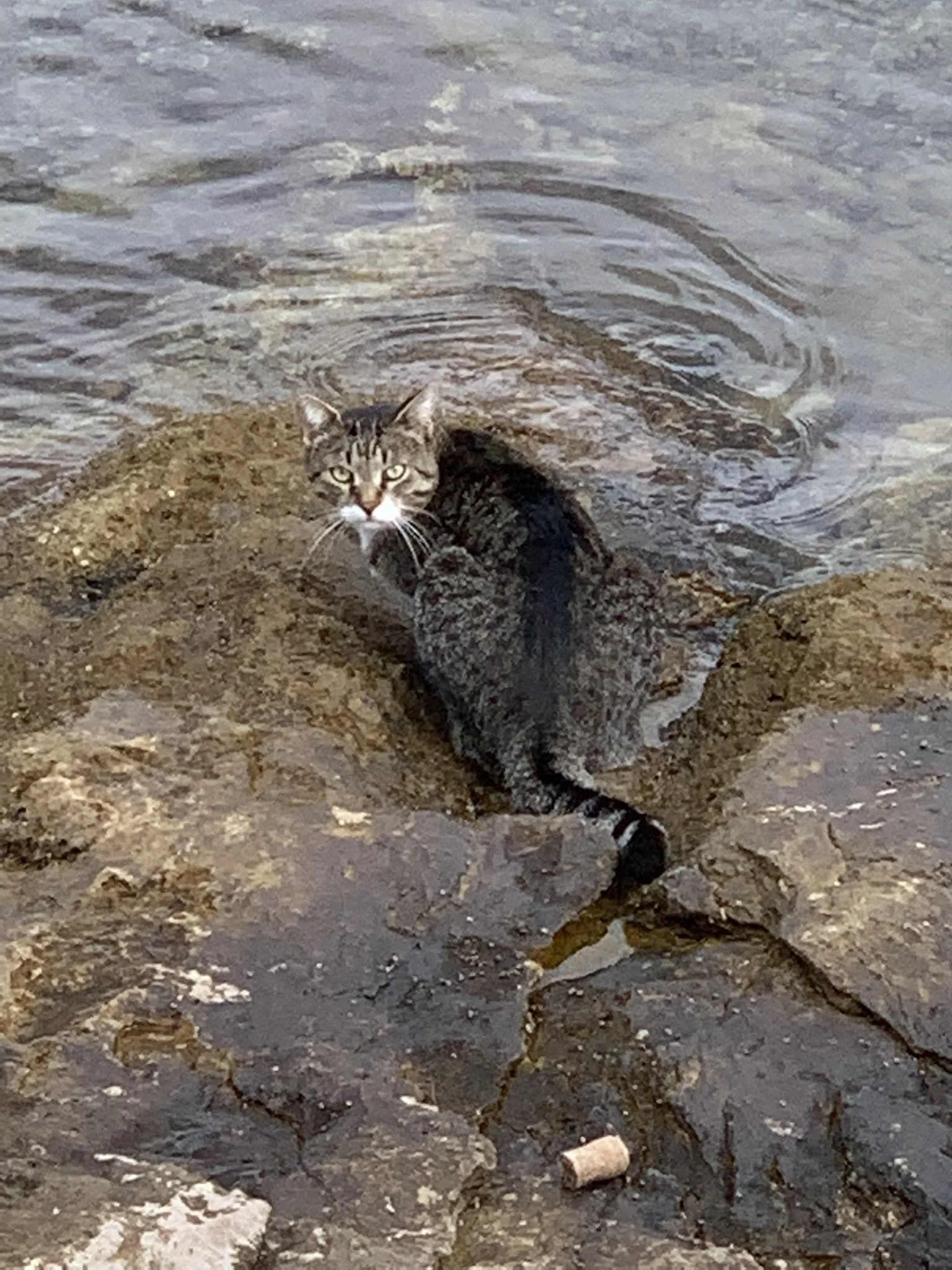
Spotting cats everywhere—the locals take good care of the island’s large population of stray cats.
Food Notes: Brač’s cuisine reflects the Mediterranean diet: fresh seafood, grilled meats, vegetables, local cheeses, and abundant high-quality olive oil, much of it produced on the island.