
Germany: Oktoberfest & Bavaria (8 Days)
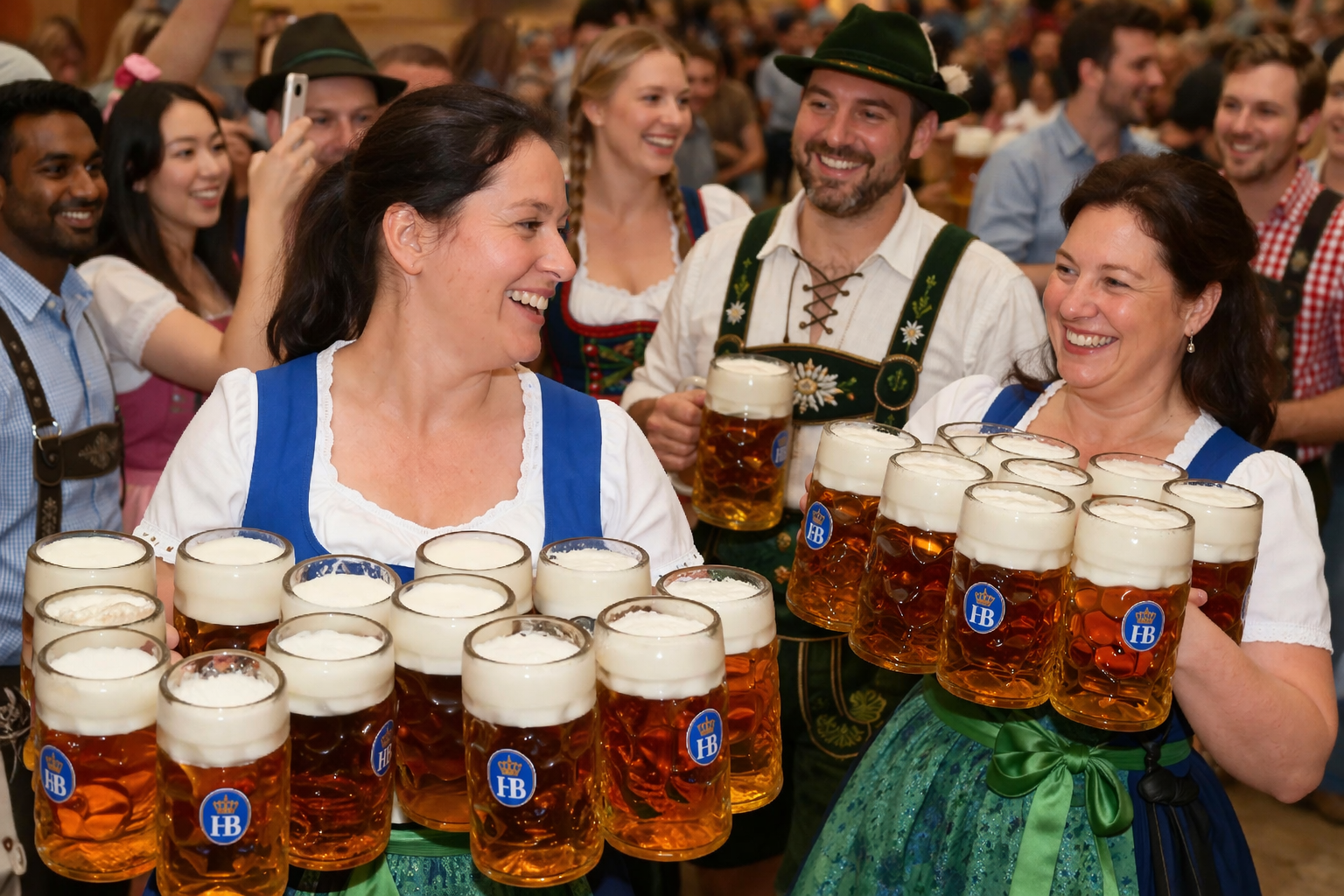
This 8-day Germany itinerary was built around a bucket-list visit to Oktoberfest in Munich. With convenient flights in and out of Frankfurt, we expanded the trip into a broader Bavarian route, adding 1 night in Hanau, 2 nights in Regensburg, 3 nights in Munich, and 2 nights in Füssen.
Rather than rushing straight to Munich, we structured the trip to ease in gradually. Hanau provided a quiet recovery stop after the flight, while Regensburg offered a more intimate, atmospheric contrast with its medieval streets, riverfront setting, and slower pace. By the time we reached Munich, we had already experienced a different side of Germany before shifting into the larger-scale energy of the capital of Bavaria.
We then continued south to Füssen, extending what is often treated as a day trip into a more immersive alpine stay. This allowed time to experience not just Neuschwanstein Castle, but also the surrounding lakes and mountain scenery.
The result is a compact itinerary with clear variety: a restful arrival, a historic small city, a high-energy urban center, and a scenic alpine finish.
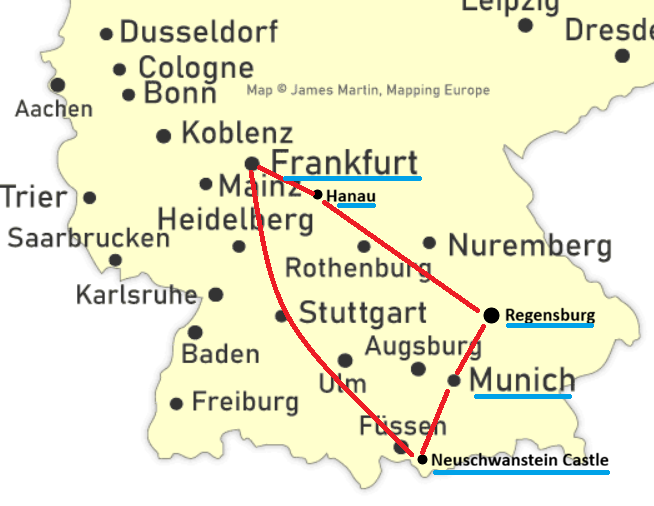
The Itinerary
Arrival: Frankfurt, Germany
A practical international gateway and the starting point for this Bavaria-focused route.
Hanau, Germany (1 night)
A short transfer from Frankfurt for a quiet recovery stop. As the birthplace of the Brothers Grimm, Hanau adds a light cultural note, but its primary purpose is to ease into the trip without the intensity of a larger city.
Regensburg, Germany (2 nights)
A compact, highly walkable UNESCO-listed city on the Danube, known for its exceptionally well-preserved medieval core, riverfront setting, and relaxed evening atmosphere. Regensburg offers architectural depth without the crowds of larger German cities.
Munich, Germany (3 nights)
A larger urban stop with a very different rhythm: grand squares, historic churches, major museums, beer gardens, and the English Garden. Munich blends Bavarian tradition with big-city energy and serves as the base for Oktoberfest if timing aligns.
Füssen, Germany (2 nights)
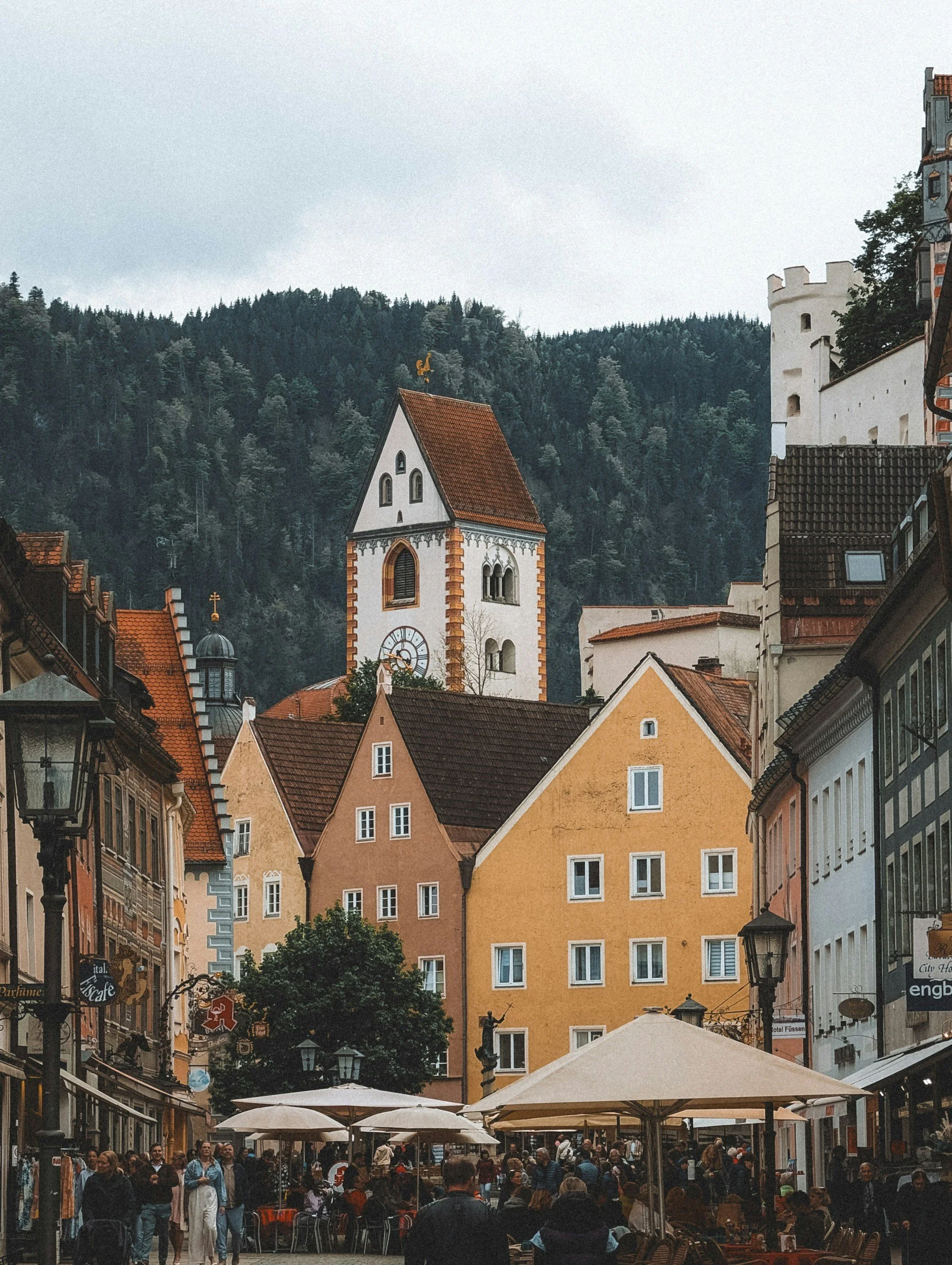
A scenic alpine town near the Austrian border, set against a backdrop of lakes and mountains. Füssen provides a quieter, more immersive setting than a day trip and allows time to experience the area beyond just the headline sights.
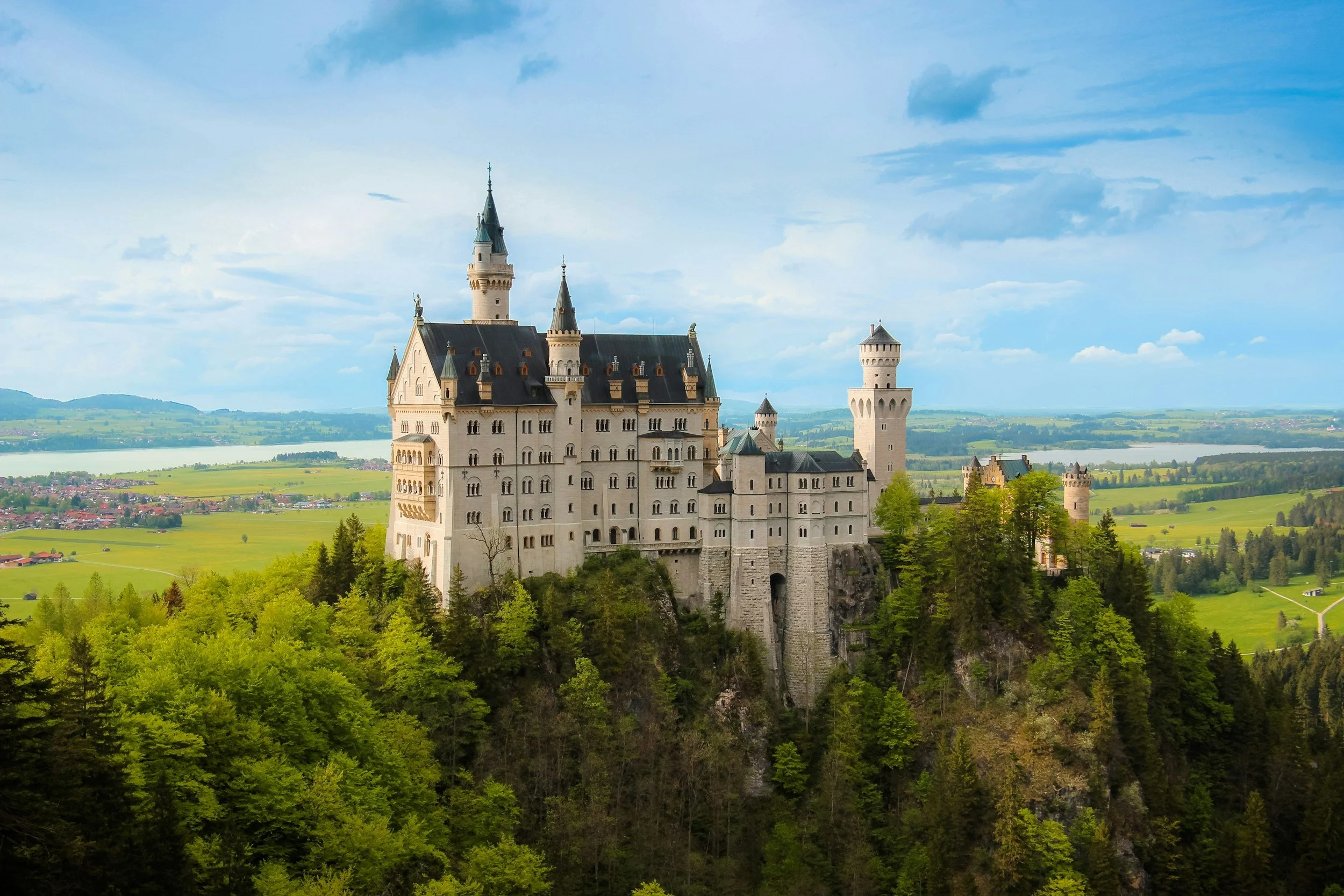
Neuschwanstein Castle – One of Germany’s most iconic and theatrical landmarks, set dramatically above the surrounding valley.
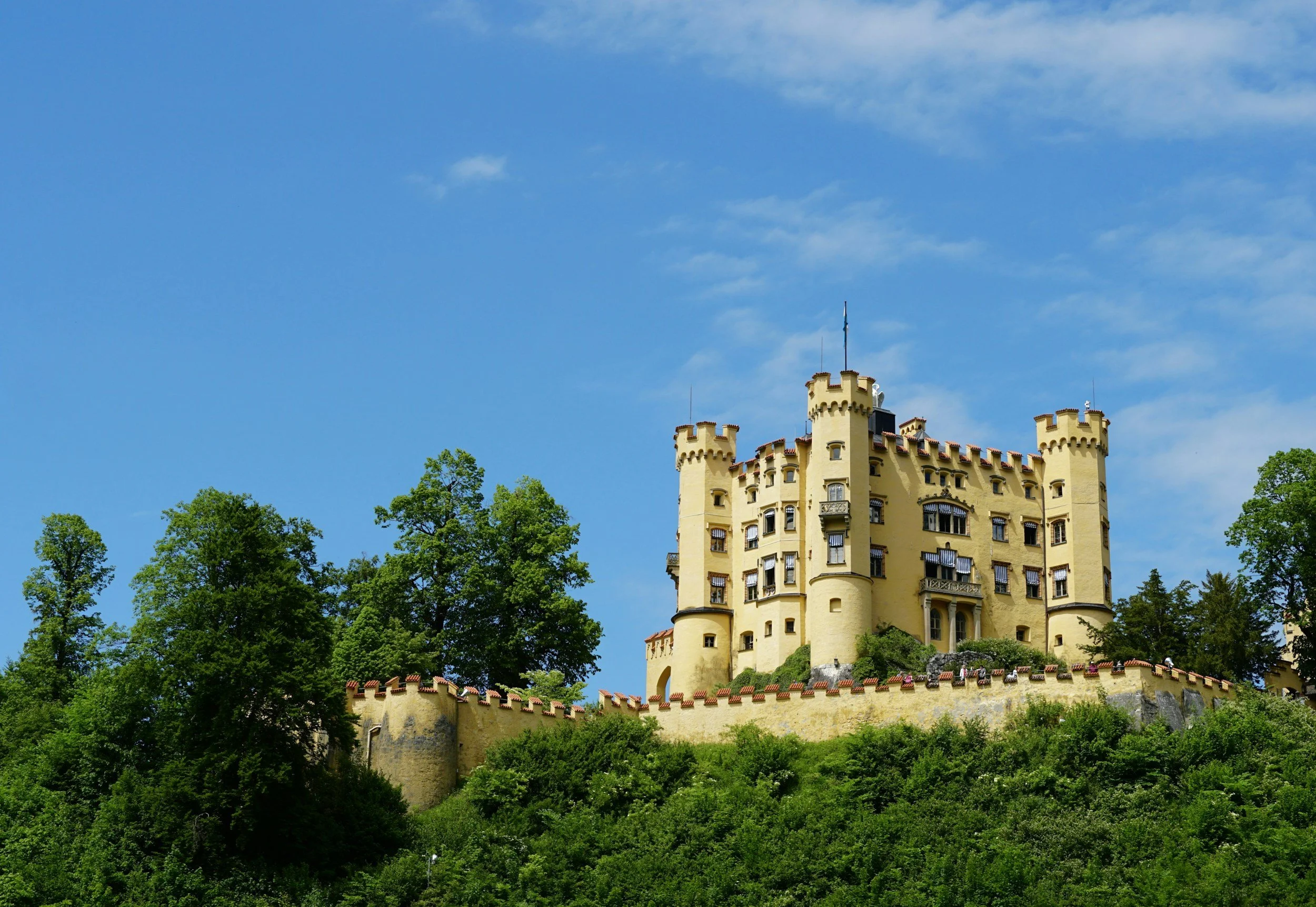
Optional time for Alpsee lake walks, Hohenschwangau Castle, and surrounding alpine scenery, which are often overlooked on rushed day trips.
Departure: Frankfurt, Germany.
Return to Frankfurt for international departure.
Hanau (1 Night)
Why we chose it: Hanau is a 20-minute taxi from Frankfurt Airport, an easy first stop after a long-haul flight.
Lodging: PLAZA Hotel Hanau. A mid-range hotel chosen for simplicity and comfort since our priority was sleep.
Memorable activities: Unstructured strolling through town with unexpectedly beautiful seasonal flower displays.
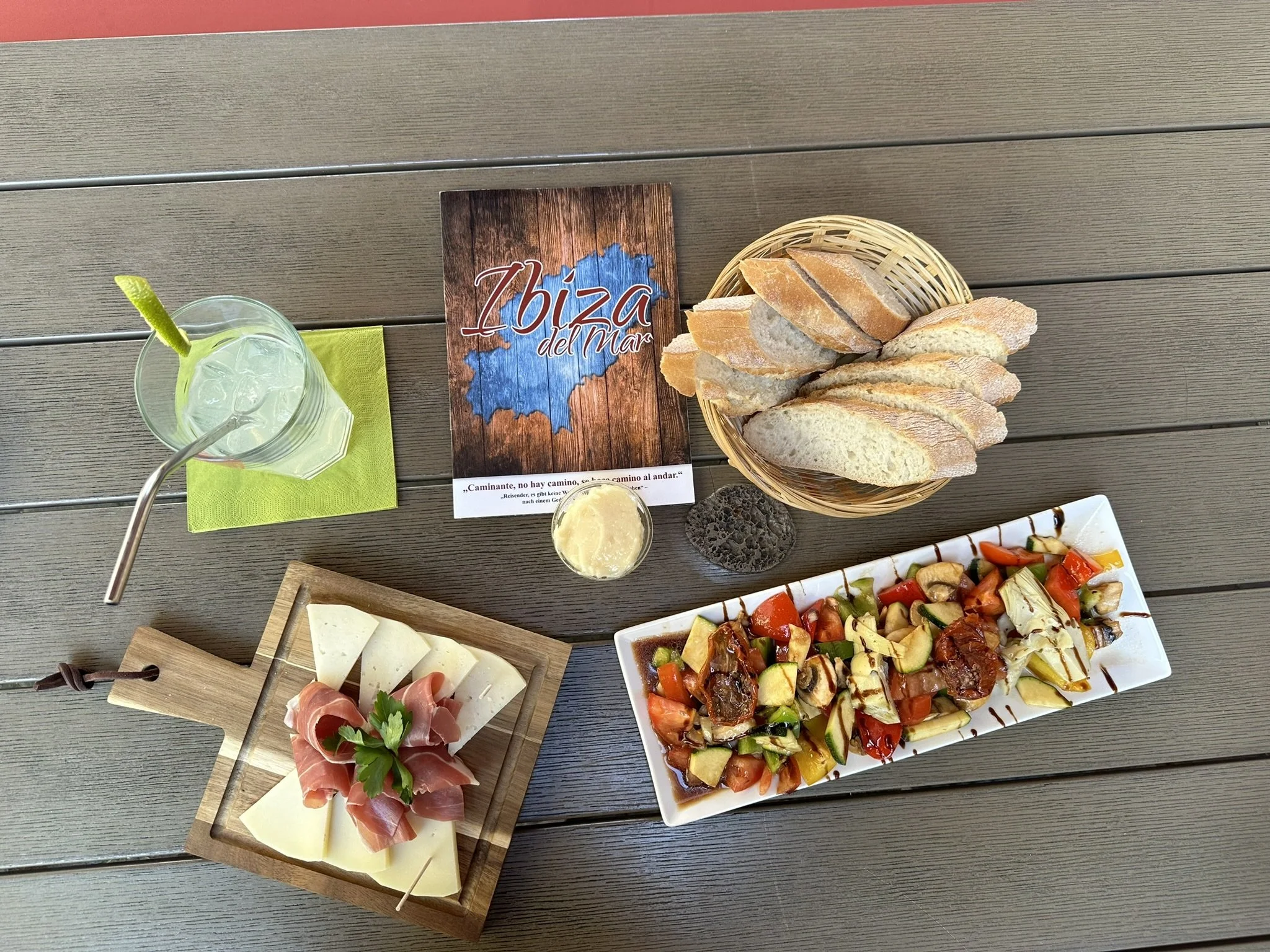
Food notes: An artistic charcuterie spread at Ibiza del Mar—casual, relaxed, and satisfying on night one.
Regensburg (2 Nights)
Why we chose it: Regensburg is an underrated Danube River city with UNESCO-listed Old Town status—compact, atmospheric, and easy to explore on foot.
Lodging: Hotel Goliath am Dom. Chosen for its location beside the cathedral and within steps of the historic core.
Atmosphere: The lobby and restaurant offered genuine Old World charm—warm, intimate, and distinctly Bavarian.
Room notes: Comfortable and serviceable, though not especially distinctive.
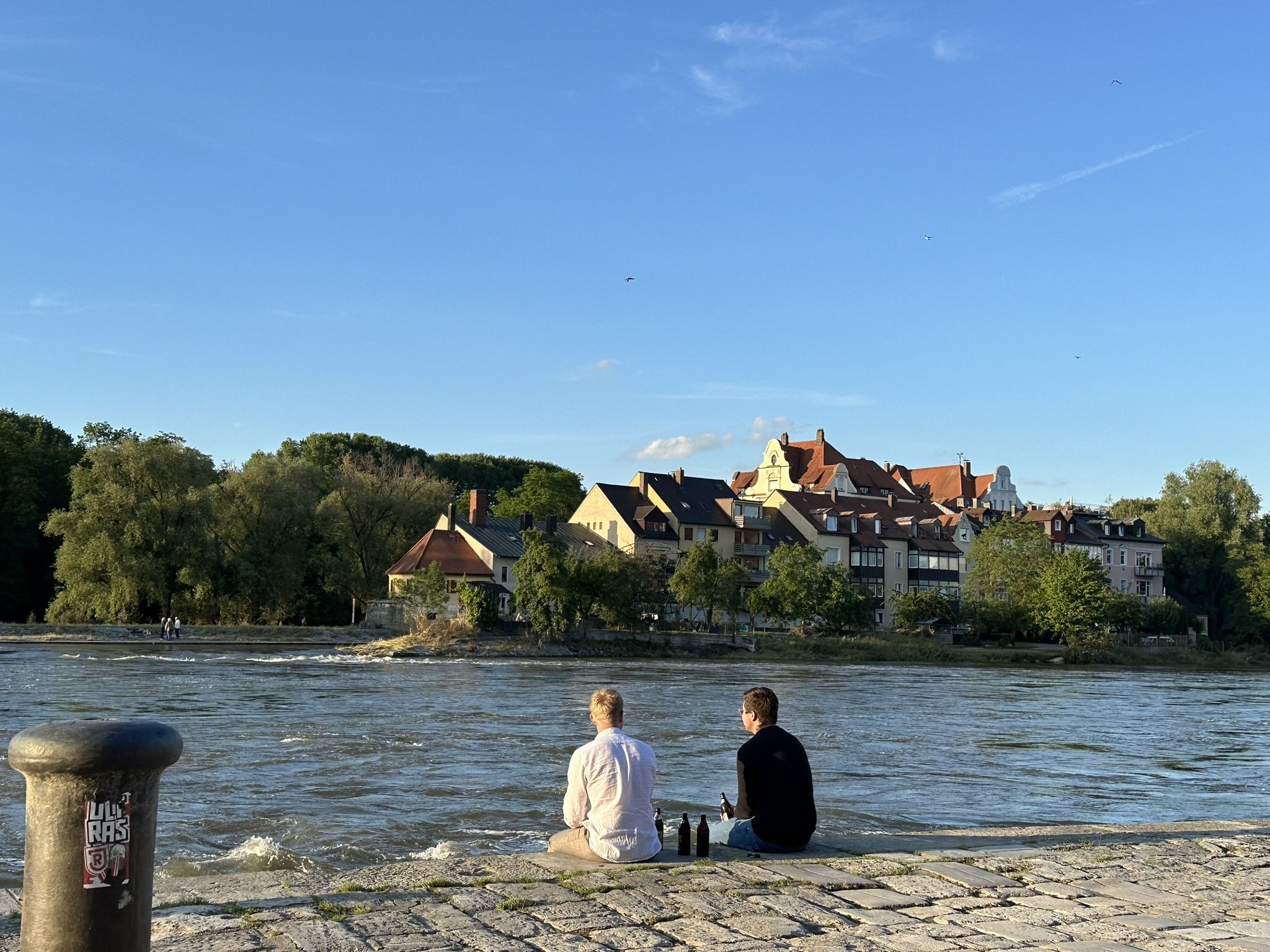
Memorable activities: Sunset along the Danube, where locals gathered with beer and picnic baskets. A simple, communal ritual that felt authentic and uncurated.
Food notes:
Bratwurst at the historic Historische Wurstküche, said to be the oldest sausage kitchen in the world (12th century). The riverside setting outshined the sausage.
A pleasant patio lunch at Weltenburger am Dom, the city outpost of the historic Weltenburg monastery brewery.
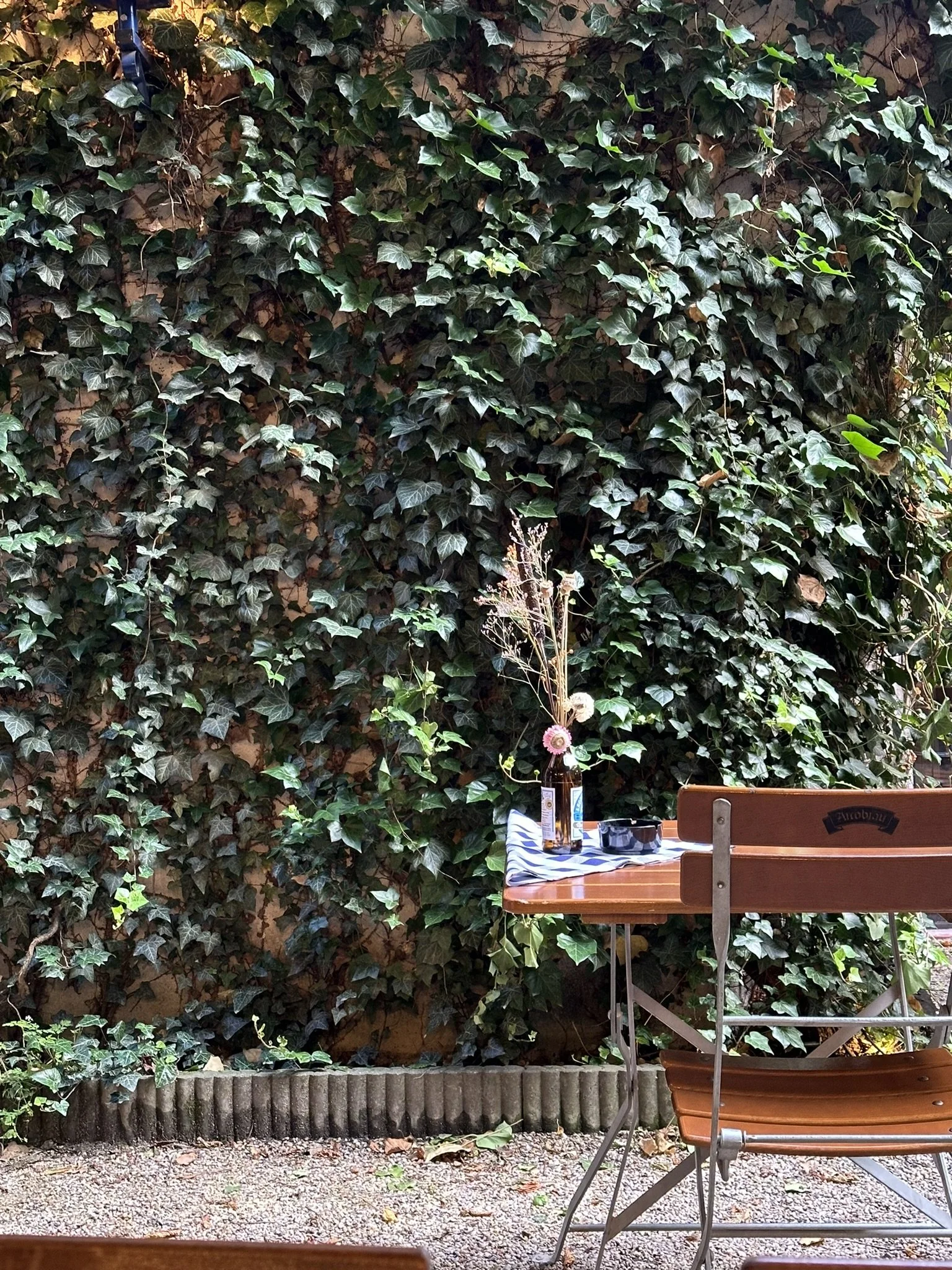
Classic Bavarian biergartens throughout town—intriguing murals, hearty fare, and generous outdoor seating.
Munich, Germany (3 Nights)
Why We Chose It
Munich was the primary purpose of this trip because it’s the best place to experience Oktoberfest, one of Europe’s most iconic festivals. Beyond the event itself, Munich is one of Germany’s most appealing cities—known for its historic squares, grand architecture, beer halls, expansive parks, and relaxed café culture. It also works well as a base for exploring nearby highlights in Bavaria, including the Alps.
Lodging
We stayed at NH Collection München Bavaria, a modern hotel with panoramic views, conveniently located next to the central train station (Hauptbahnhof) and within walking distance of the Oktoberfest grounds (Theresienwiese).
Memorable Activities
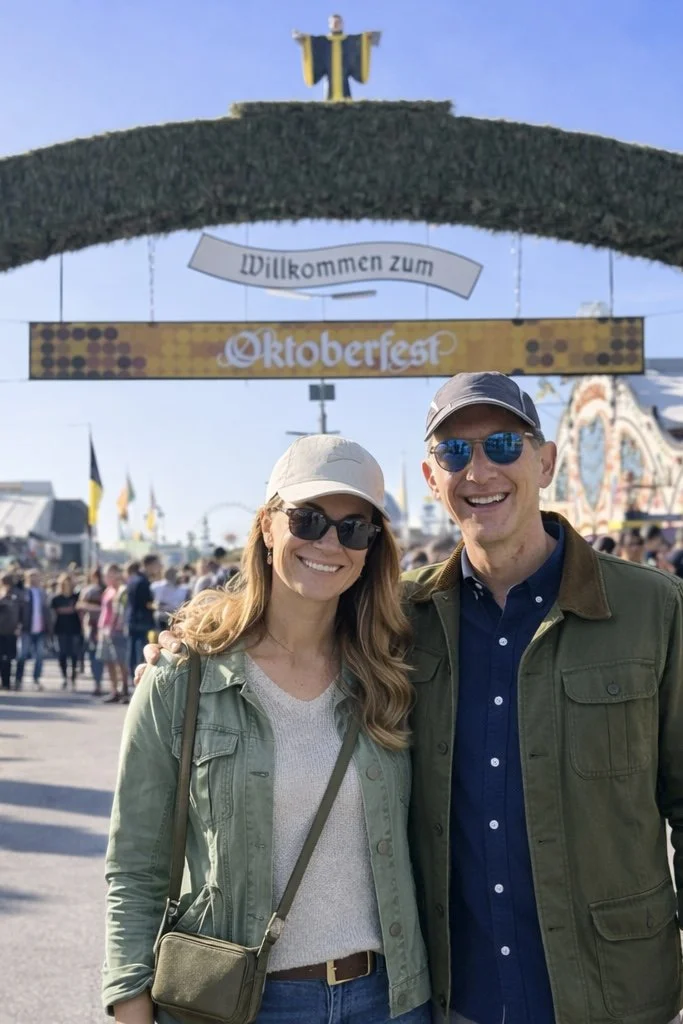
Oktoberfest – A major highlight of the trip (covered below).
Getting Around by E-Scooter – A surprisingly efficient way to move between neighborhoods and major sights.
Exploring the City Center – Wandering through lively squares, historic streets, and passing street musicians and landmarks.
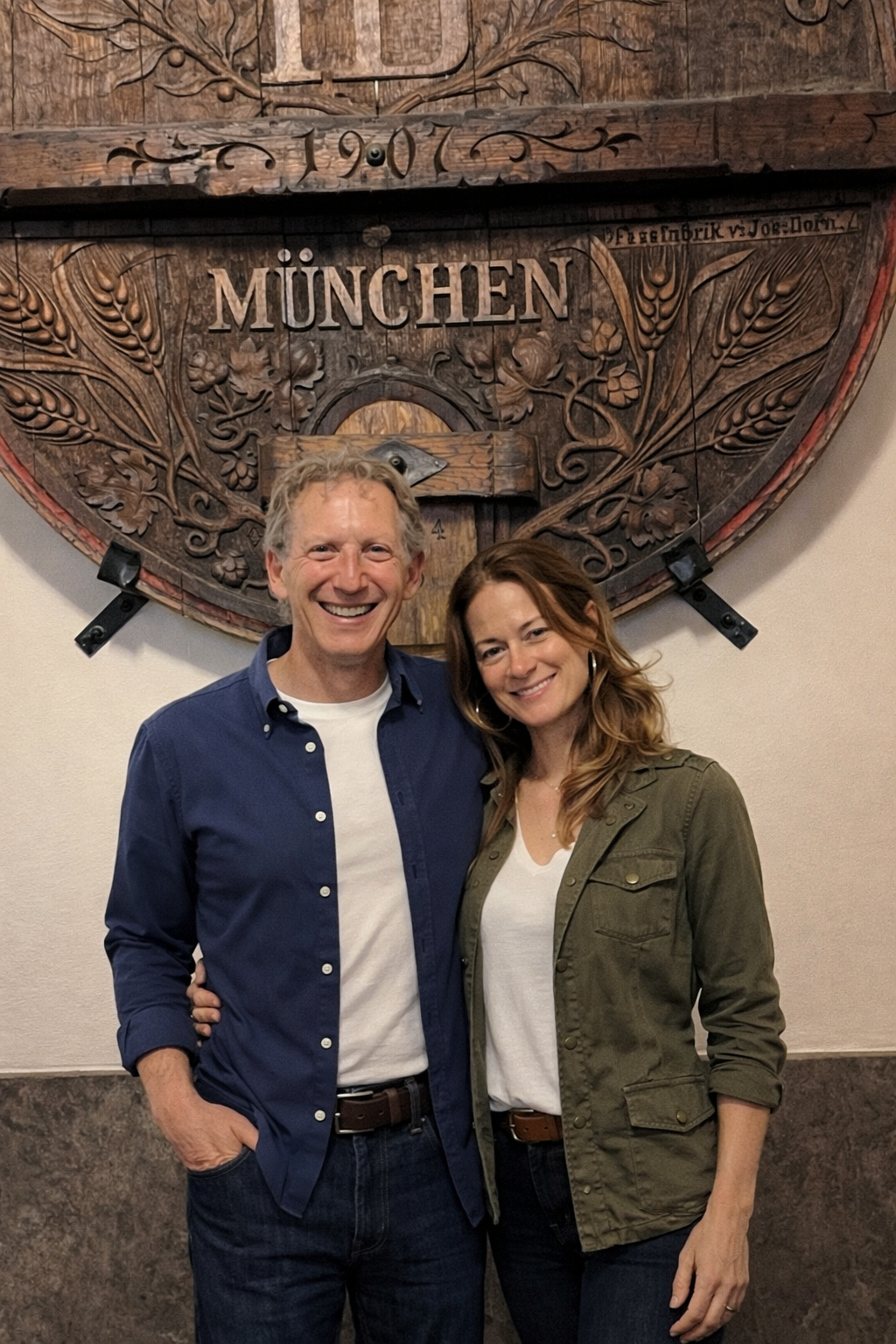
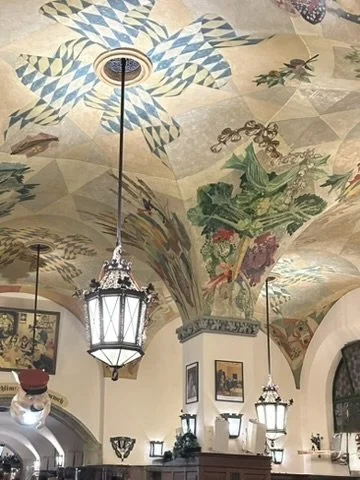
Hofbräuhaus – Munich’s most famous beer hall, founded in 1589, offering a classic Bavarian atmosphere.
Neuschwanstein Castle Day Trip – A roughly two-hour excursion into the Bavarian Alps to visit Germany’s most iconic “fairy-tale” castle.
Food & Drink Notes
Munich is defined by its beer garden culture, with long communal tables set beneath chestnut trees. These open-air spaces offer a relaxed, local atmosphere with simple Bavarian food and fresh beer served in large steins. Many allow outside food, making them an easy and authentic way to spend an afternoon.
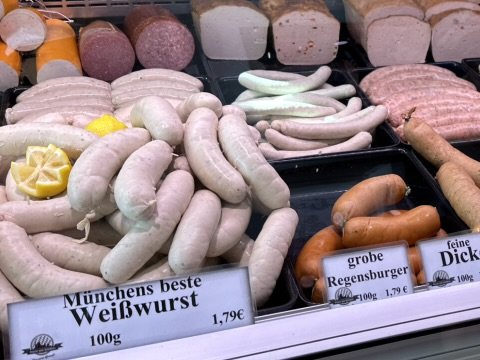
Weißwurst – A traditional Bavarian sausage made from veal and pork, gently poached and typically eaten before noon. Served with sweet mustard, a soft pretzel, and wheat beer. The casing is not eaten.
Boilerman Bar – A stylish, speakeasy-like bar inside the 25hours Hotel Royal Bavarian, known for its highballs, cocktails, and extensive whiskey selection.
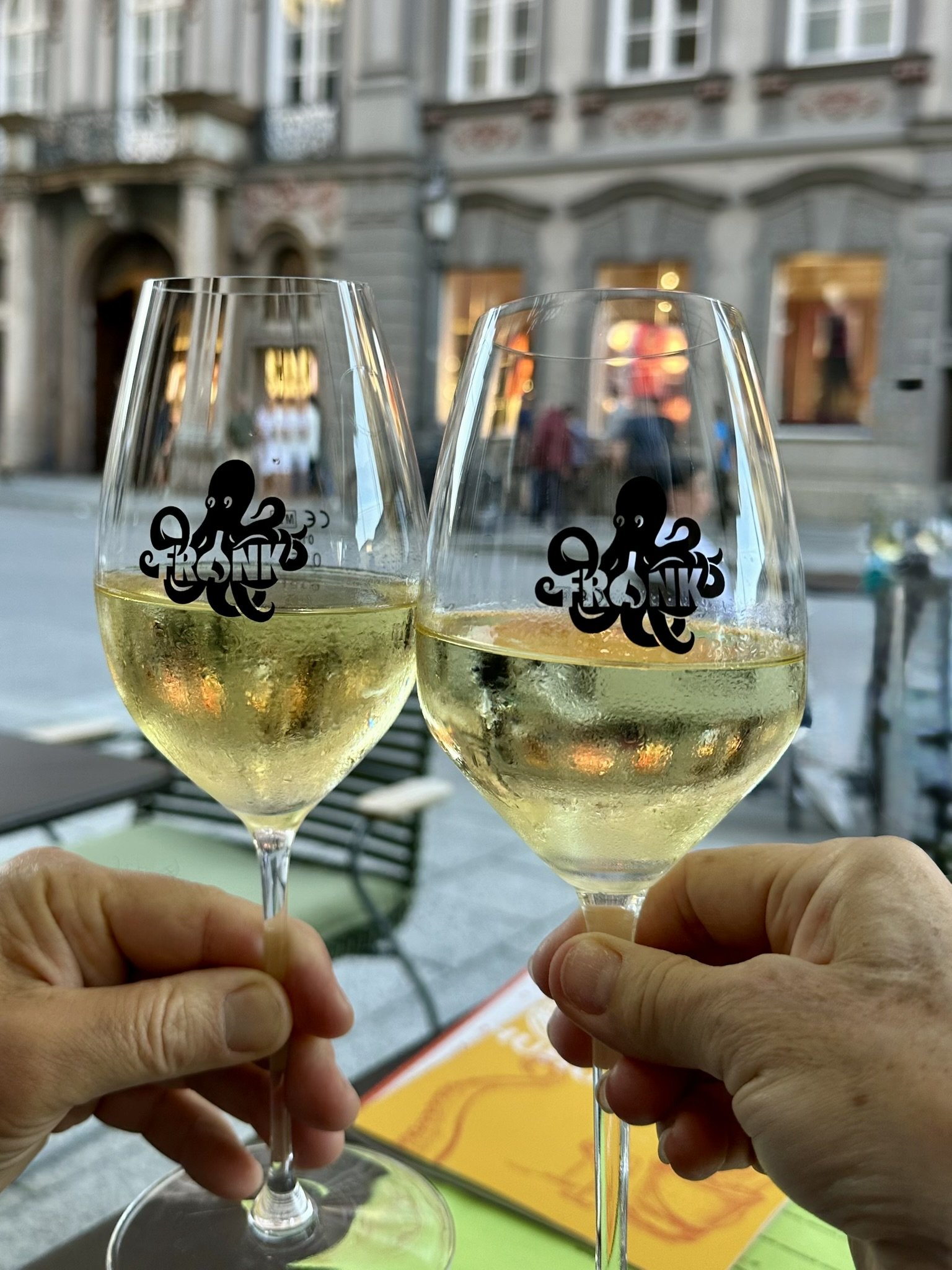
Frank Winebar – A centrally located wine bar featuring Franconian wines, attentive service, and well-executed dishes such as beef tartare and grilled squid.
Oktoberfest
What It Is
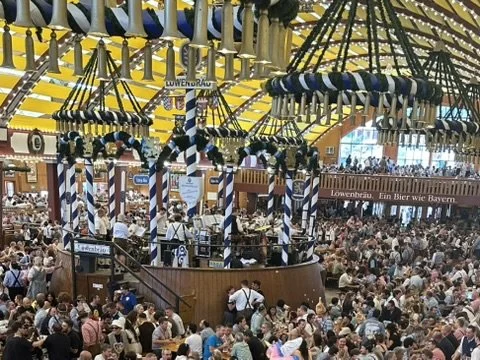
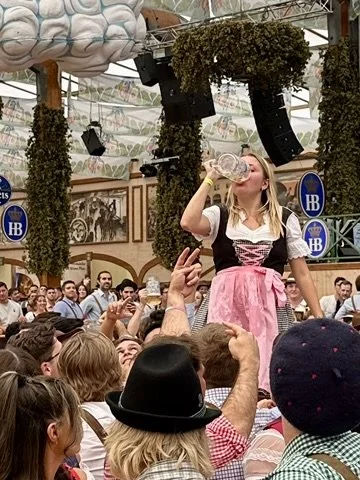
Oktoberfest is the world’s largest folk festival, held annually at the Theresienwiese in Munich. At its core, it is a series of massive beer tents hosted by Munich breweries, each with its own atmosphere—ranging from lively and raucous to more traditional and reserved. Long communal tables, live bands, and servers carrying a dozen liter steins create a uniquely energetic environment. Beyond the tents, the grounds include carnival rides, food stands, and open-air beer gardens, making it feel more like a large-scale fair than a single event.
What It Is Not
Oktoberfest is not just casual beer drinking—it is a structured, highly organized cultural event with defined rules and service areas. While some tents are high-energy, many are more traditional and relaxed. The daytime atmosphere is more orderly than many typical large U.S. festivals, with less visible excess than one might expect and a crowd that includes many locals and regional visitors, not just international partygoers.
Know Before You Go
Timing matters – Earlier in the day is more manageable; evenings become crowded and more chaotic.
Reservations – Required for guaranteed seating in popular tents, especially at night.
Cash is essential – Many tents do not accept cards.
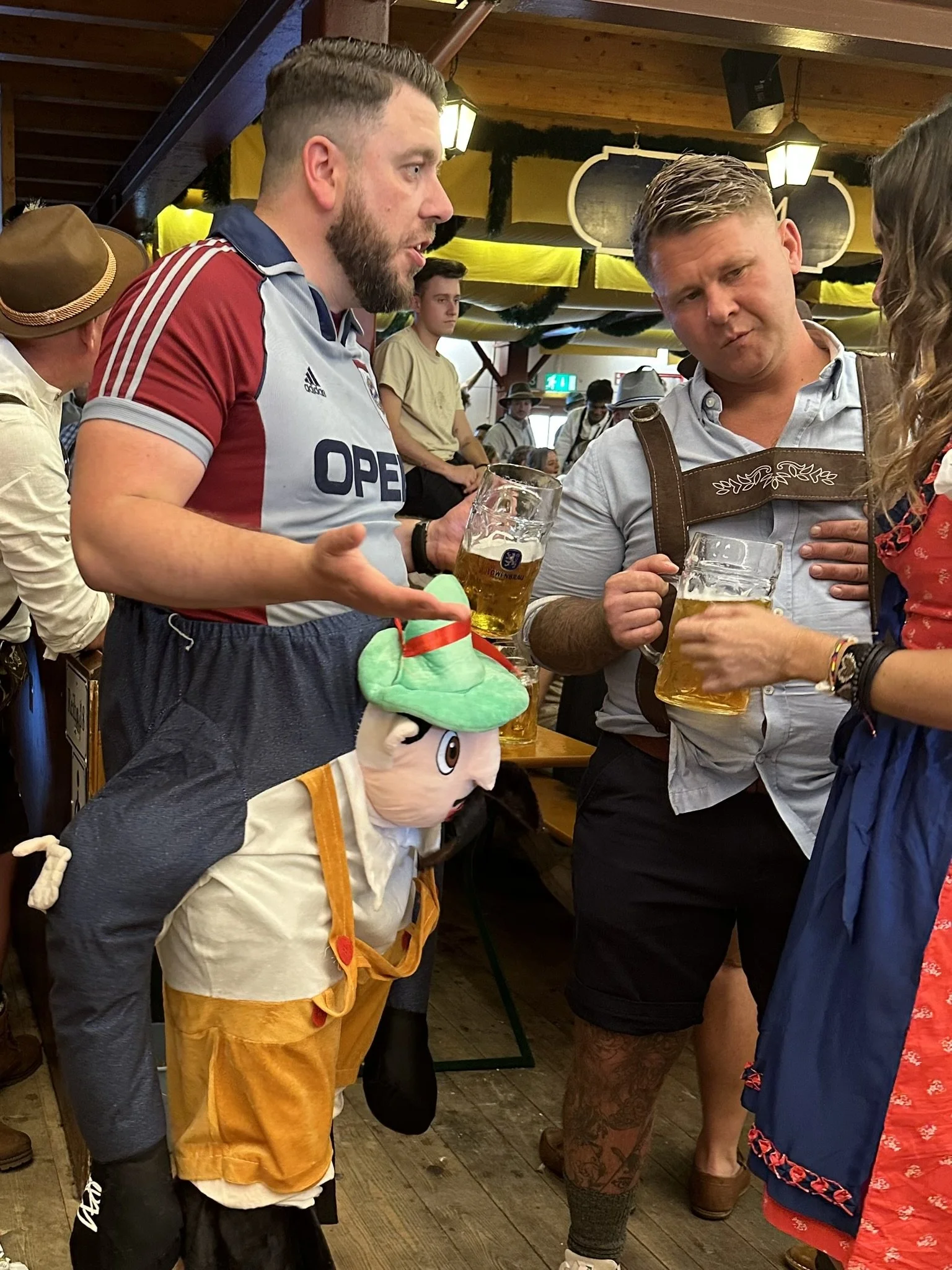
Beer – Brewed specifically for Oktoberfest by Munich breweries and slightly stronger than standard lagers, served in 1-liter steins only. Each tent is tied to a single brewery and primarily serves its Oktoberfest Märzen, so beer choice is limited.
Dress – Traditional attire (lederhosen for men and dirndls for women) is common but not required.
Navigation – The grounds are large so it helps to familiarize yourself with tent locations in advance.
Food & Drink Notes
Beverages – Every tent serves one signature Oktoberfest brew and some tents offer a small selection of beer-alternatives such as radler (beer + lemonade), wine, and non-alcoholic drinks.
Pretzels (Brezn) – Large, soft, and ubiquitous.
Roast chicken (Hendl) – One of the most popular dishes in the tents.
Sausages and pork dishes – Classic Bavarian fare.
This page may contain affiliate links, which means we may earn a small commission if you make a purchase through them at no additional cost to you.
Füssen (2 Nights)
Why We Chose It
Füssen offers a more immersive way to experience the Bavarian Alps than a rushed day trip. Staying overnight allows time to see Neuschwanstein Castle without the peak crowds and to explore the surrounding lakes and mountain scenery at a more relaxed pace.
Lodging: Hotel Sonne — A well-located boutique hotel in the heart of Füssen’s Old Town, within easy walking distance of restaurants, shops, and transit connections to the castles.
Atmosphere. Stylish and contemporary with subtle alpine influences. The hotel blends modern design with regional touches, creating a space that feels polished but not overly formal. The lobby and common areas have a clean, curated look, while still maintaining a sense of place appropriate to a mountain town.
Room Notes. Rooms are modern, thoughtfully designed, and more spacious than expected for a central Old Town property. Décor leans minimalist with warm materials and occasional Bavarian accents. Bathrooms are updated and functional. If available, request a room on a higher floor or facing a quieter street for better light and less noise.
Memorable Activities
Neuschwanstein Castle – Best visited early or later in the day to avoid peak crowds. The setting is as memorable as the castle itself.
Marienbrücke Viewpoint – The classic vantage point for dramatic views of Neuschwanstein and the surrounding valley.
Alpsee Walk – A scenic, relatively easy walk around the crystal-clear lake below the castles.
Hohenschwangau Castle – Often overlooked, but worth considering for additional context and fewer crowds.
Food Notes
Dining in Füssen tends toward traditional Bavarian fare—hearty, simple, and satisfying after a day outdoors. Expect dishes like sausages, schnitzel, spaetzle, and local beer, often served in cozy dining rooms or outdoor terraces with mountain views.