
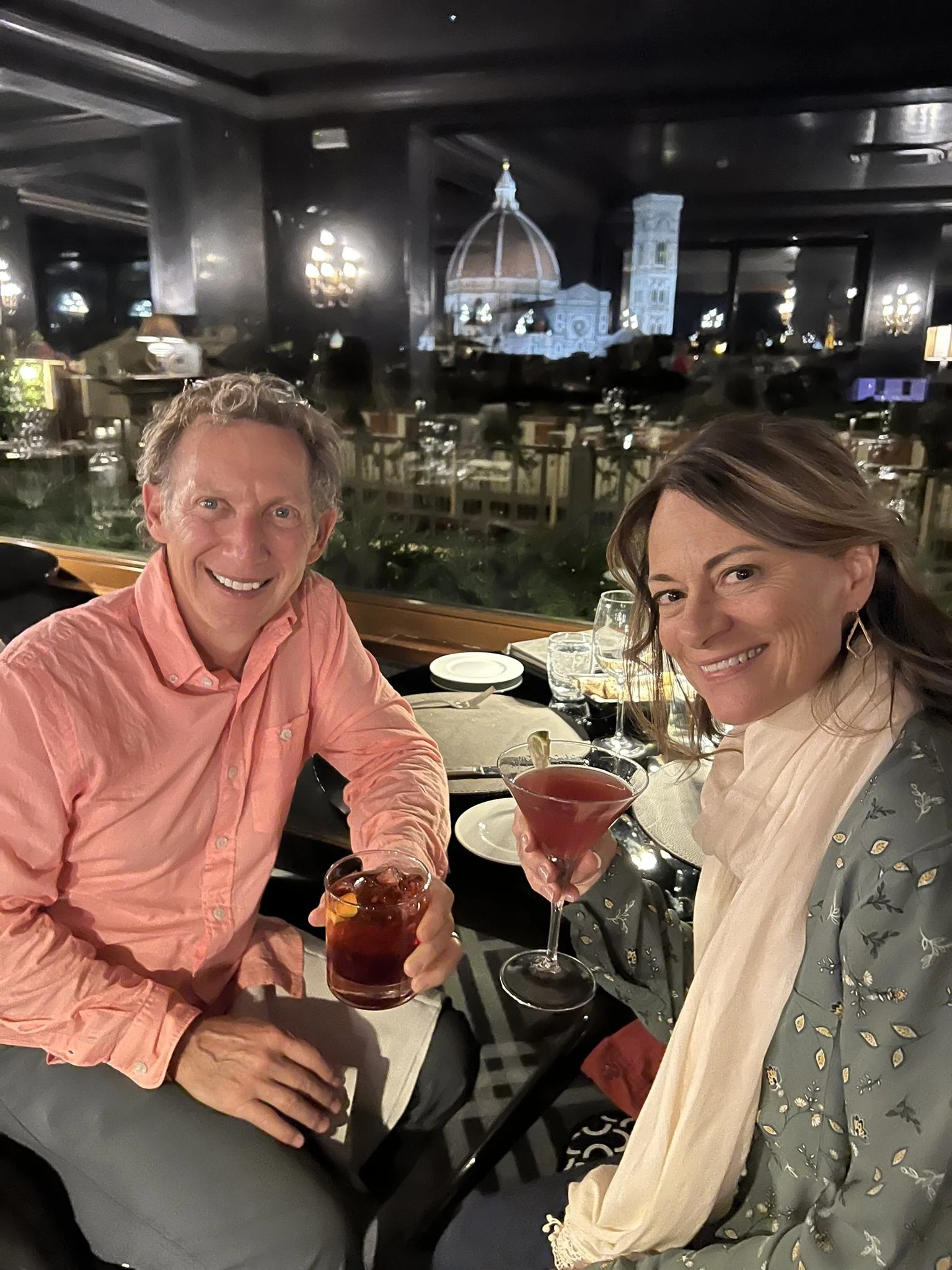
Rome & Florence, Italy
This 7-day trip included three nights in a modest Airbnb in Rome’s Trastevere neighborhood and four nights in an upscale B&B near Piazza Santa Croce in Florence.
Why We Chose Rome & Florence
Although we always plan trips with intention, we also try to take advantage of long connections or convenient routing when they create an opportunity to see someplace new. In this case, we were traveling to Croatia with a connection in Rome, and decided to turn the stop into a short pre-trip in Italy.
Rome was an obvious choice. Neither of us had visited before, and the city’s extraordinary layers of history—from the Roman Empire to the Renaissance and Baroque periods—make it one of the most culturally significant cities in the world.
For the second destination, we considered several options including Naples, Bologna, and Florence. We ultimately chose Florence for its manageable size, walkability, and concentration of Renaissance art and architecture. The city’s historic center is remarkably intact, creating a setting that feels almost like an open-air museum.
How We Structured It
We structured the trip to provide two contrasting types of experiences.
In Rome, we stayed in a modest Sonder apartment in Trastevere, a lively neighborhood known for its narrow cobblestone streets, ivy-covered buildings, trattorias, and vibrant evening atmosphere. The area felt local and slightly removed from the heaviest tourist crowds while still being within walking distance of many major sights.
In Florence, we shifted to a more refined experience and booked a Junior Suite at Maison du Sage, an elegant small hotel located just off Piazza Santa Croce in the historic center. The location made it easy to explore Florence on foot, with the Duomo, Uffizi, and Ponte Vecchio all within a short walk.
Travestere, Roma, Italia
Trastevere sits just across the Tiber River from Rome’s historic center and is widely considered one of the city’s most atmospheric neighborhoods. The district is known for its narrow cobblestone lanes, ivy-covered buildings, small piazzas, and lively restaurant scene. Despite its popularity with visitors, it retains a distinctly Roman character and feels less formal than the monumental districts across the river.
During the day, Trastevere has a relaxed neighborhood feel, with cafés, bakeries, and small artisan shops scattered along the winding streets. In the evening the area becomes one of Rome’s most vibrant dining districts, with trattorias and wine bars spilling out into the streets and locals gathering in the piazzas.
The location also works well as a base for exploring the city. Many major sights are within walking distance, and Trastevere offers a pleasant retreat after a day navigating Rome’s larger crowds. While in Rome we primarily walked, used Uber, and occasionally took the metro, which made it easy to move between the city’s major historic sites.
Key Highlights
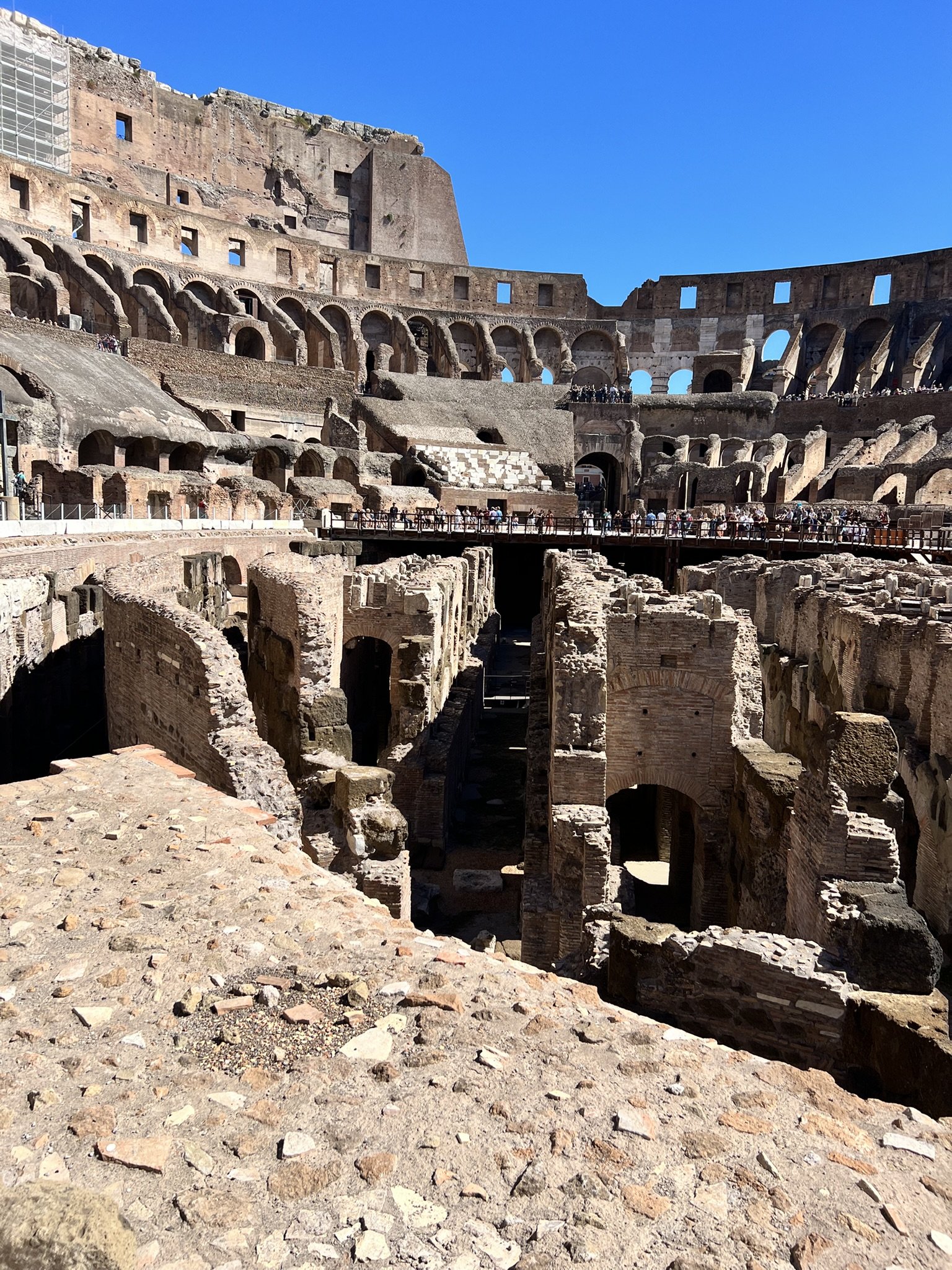
Colosseum – One of the most recognizable monuments of the Roman Empire. We booked a guided tour through Viator and paid extra for access to the underground chambers, where gladiators and animals once waited before entering the arena. Definitely worth it!
Roman Forum & Palatine Hill – The political and ceremonial center of ancient Rome, filled with temple ruins, arches, and expansive views of the city.
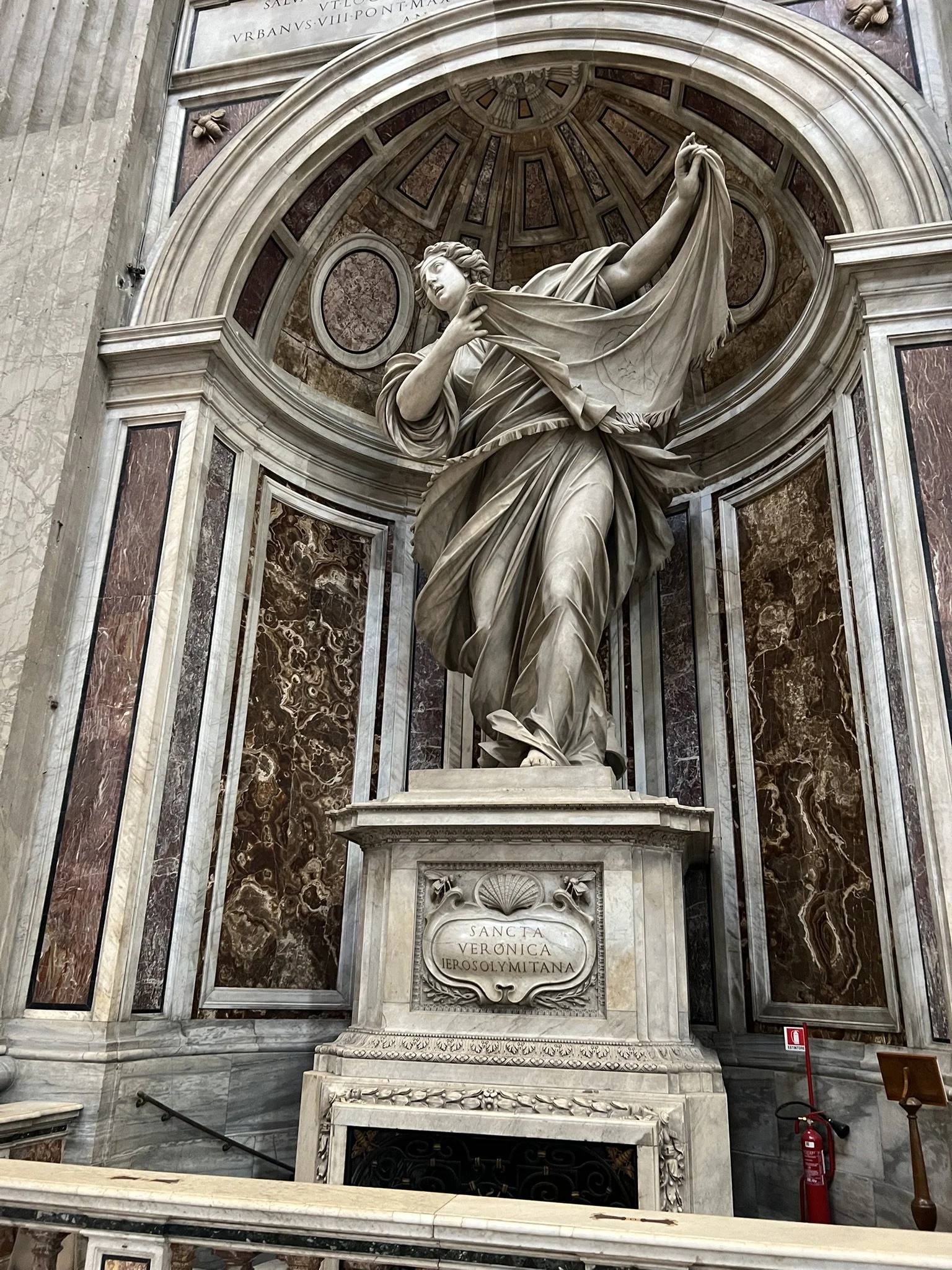
St. Peter’s Basilica – We booked a Get-Your-Guide tour of the basilica. Our guide was a history professor and native English speaker who turned the experience into a compelling narrative. Dressed like Indiana Jones, he was an excellent storyteller.
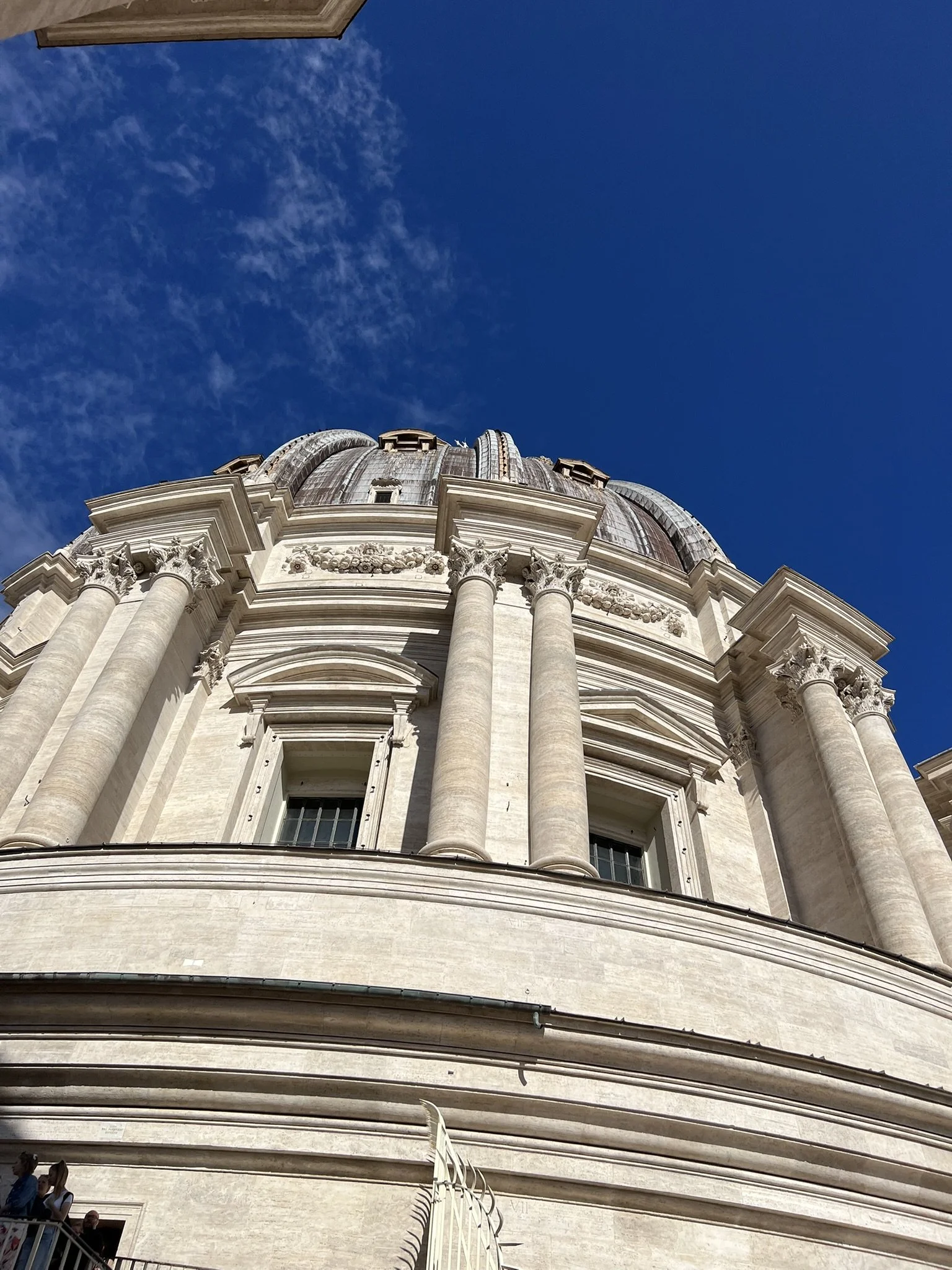
Climbing the Dome – It is worth climbing the 551 steps to the top of Michelangelo’s dome for sweeping views over Vatican City and Rome.
What We Skipped
With limited time in a city as dense with attractions as Rome, we chose to avoid several sights known for long queues and time-consuming indoor visits, focusing instead on outdoor landmarks and neighborhoods.
Vatican Museums & Sistine Chapel – World-famous collections and Michelangelo’s ceiling frescoes, but often associated with very long lines, especially during peak travel seasons.
Castel Sant’Angelo – Historic fortress and museum near the Vatican offering excellent views from the top.
Capitoline Museums – One of the world’s oldest public museums, housing important Roman sculptures and artifacts.
Instead, we concentrated on walking the city, exploring ancient ruins, and spending time in Rome’s piazzas and neighborhoods, which felt like a better use of our limited time.

Firenze, Italia
Florence is widely regarded as the birthplace of the Renaissance and remains one of the most architecturally beautiful cities in Europe. Its historic center is compact and remarkably intact, with red-tiled roofs, narrow stone streets, and elegant piazzas framed by churches, palaces, and centuries-old civic buildings.
Unlike Rome, which feels sprawling and layered with many historical periods, Florence is smaller and more cohesive, making it easy to explore on foot. Nearly every street leads to another remarkable view—an ornate church façade, a sculpture-filled square, or a glimpse of the Duomo rising above the city.
The city is also synonymous with art, craftsmanship, and food. Renaissance masters such as Michelangelo, Leonardo da Vinci, and Botticelli worked here, and Florence remains known for its artisan workshops, leather goods, gelato, and traditional Tuscan cuisine.
Lodging
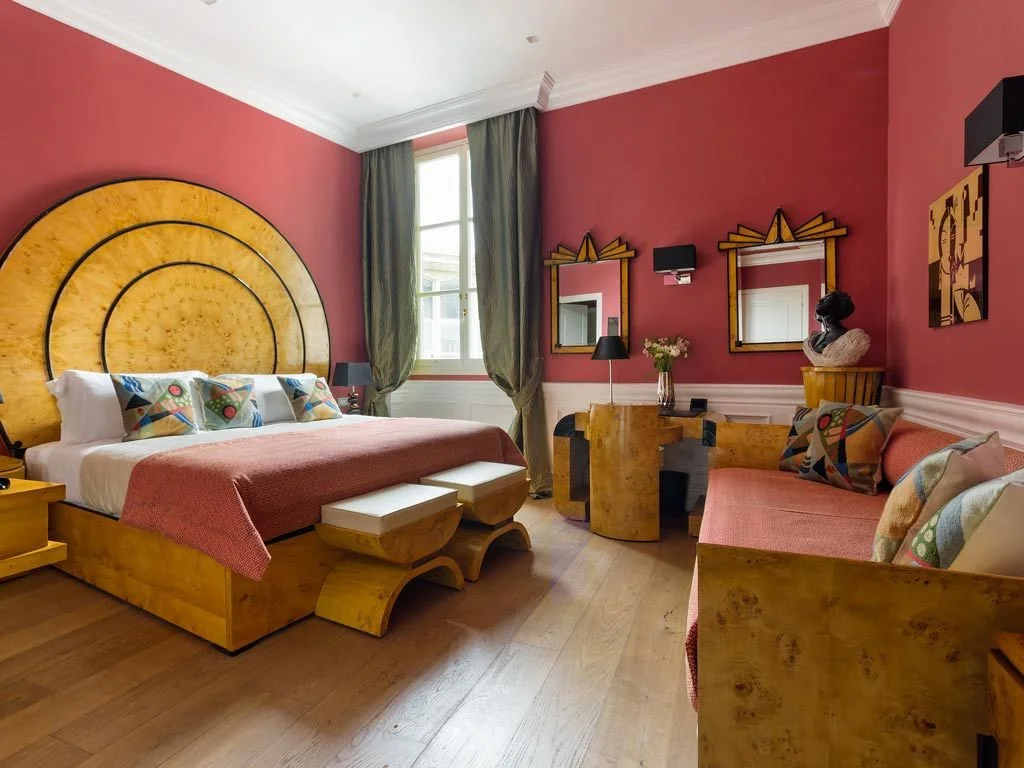
We stayed at Maison du Sage, a small boutique hotel located just off Piazza Santa Croce in the historic center. The property has a distinct Art Deco aesthetic, with geometric design elements, warm lighting, and polished finishes.
Our Junior Suite was spacious by European standards and provided a comfortable base for exploring the city. The location was excellent—central enough to walk almost everywhere while still feeling slightly removed from the busiest tourist corridors.
Key Highlights
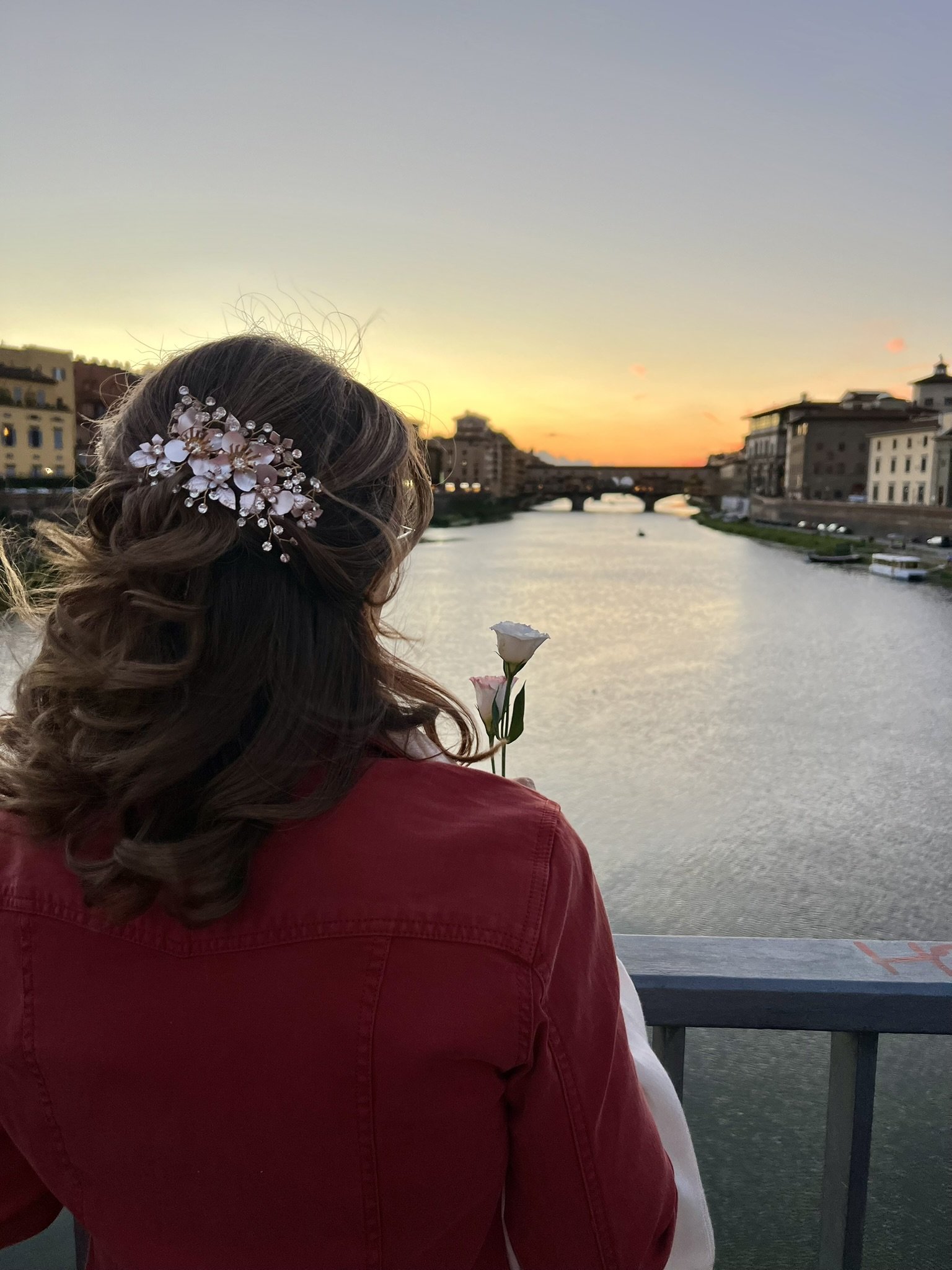
Ponte Vecchio – Florence’s famous medieval bridge spanning the Arno River, lined with historic jewelry shops.
Piazza della Signoria & Palazzo Vecchio – One of Florence’s most impressive squares, functioning almost like an open-air sculpture gallery with famous statues and the imposing Palazzo Vecchio.
Piazzale Michelangelo – The best panoramic view of Florence, overlooking the Arno River, the Duomo, and the city’s red rooftops.
Pitti Palace & Boboli Gardens – A vast historic palace complex behind the river, with expansive gardens, sculptures, fountains, and sweeping city views.
Basilica of Santa Croce – Final resting place of Michelangelo, Galileo, and Machiavelli, making it one of Florence’s most historically significant churches.
Mercato Centrale – A lively indoor market featuring local food stalls, fresh produce, and casual dining options.
Scooters Around the City – When visiting major cities we often enjoy renting scooters, and Florence turned out to be particularly well suited for it. It made it easy to move between sights and explore neighborhoods beyond the historic core.
What We Skipped
With only a few days in Florence, we chose to focus on exploring the city itself rather than spending hours in museum lines.
Uffizi Gallery – Home to masterpieces by Botticelli, Leonardo da Vinci, and other Renaissance masters, but it often requires significant waiting time.
Galleria dell’Accademia – Famous for Michelangelo’s David. Instead of waiting in line, we viewed the replica in Piazza della Signoria.
Climbing the Duomo – Another popular activity that typically involves long queues and timed entry tickets. Plus, we had already climbed St. Peter’s Basilica in Rome.
Food & Drink
Food and drink in Italy are central to daily life, and even simple meals tend to be memorable. Ingredients are typically fresh and high quality, preparations are straightforward, and meals are meant to be enjoyed at a relaxed pace. Between Rome and Florence, we experienced two distinct regional styles.
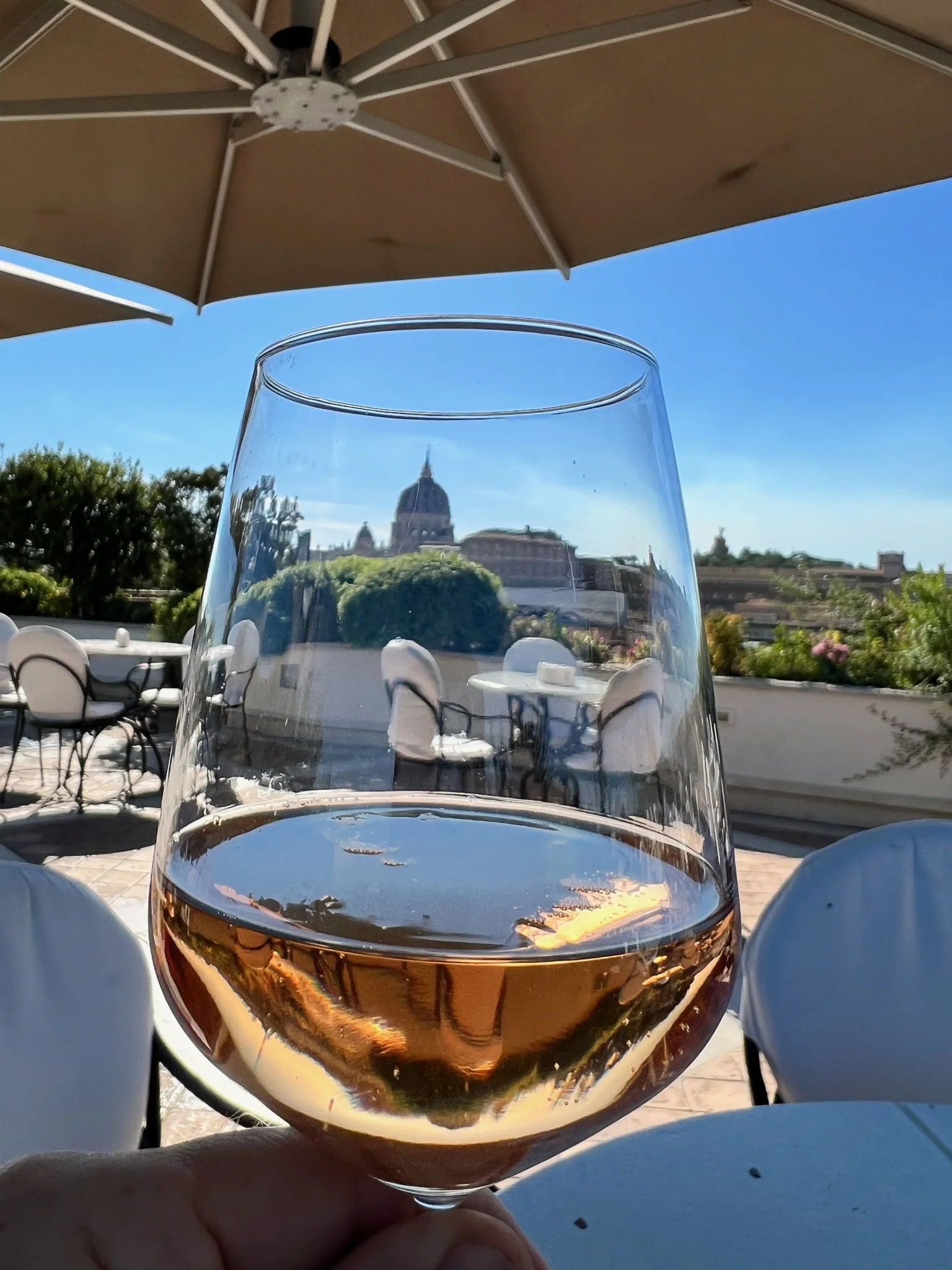
Rome is known for its classic Roman pastas—cacio e pepe, carbonara, amatriciana, and gricia—along with thin Roman-style pizza and traditional trattoria fare. Since we were staying in Trastevere, one of the city’s most restaurant-dense neighborhoods, it was easy to find excellent casual meals just steps from our apartment. Evenings often involved wandering the cobblestone streets until a busy trattoria caught our attention. Drinks commonly included Italian house wines, Aperol spritz, and the occasional Negroni, which originated in Florence but is served everywhere in Italy.
Florence, by contrast, is known for simple Tuscan cuisine that emphasizes high-quality ingredients. Typical dishes include fresh pasta, cured meats, aged cheeses, ribollita (Tuscan bread and vegetable soup), and bistecca alla fiorentina, the region’s famous thick-cut grilled steak. Meals are often accompanied by local wines—particularly Chianti—and generous olive oil, reflecting the straightforward cucina povera traditions of the region.
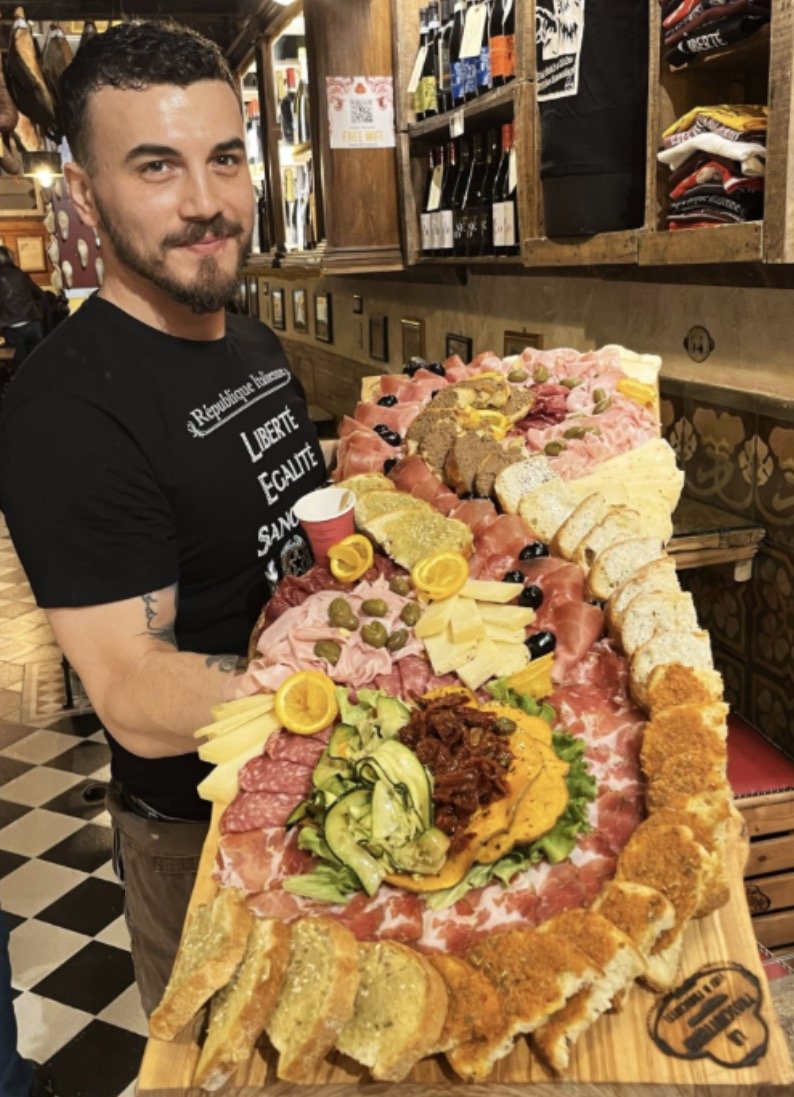
One of our favorite casual stops in Florence was La Prosciutteria, a lively spot specializing in large wooden boards piled with prosciutto, salami, cheeses, olives, and fresh bread. It’s an easy place to sample Tuscan cured meats and regional wine in a relaxed setting.
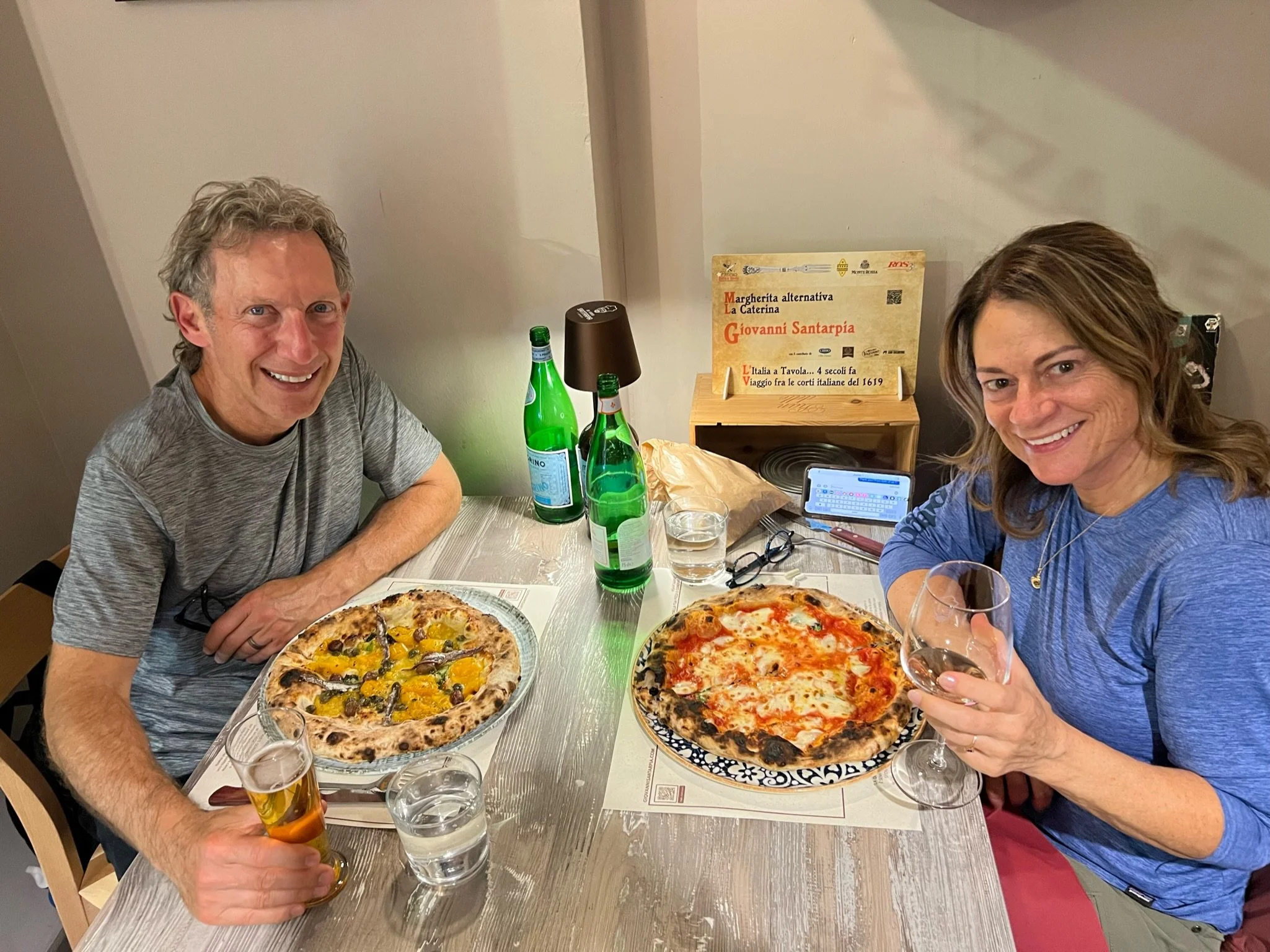
We also made an epic scooter ride outside Florence to Pizzeria Giovanni Santarpia, widely regarded as one of the city’s best pizza spots. We arrived at 4:30 pm without a reservation, waited on the sidewalk with other hopeful diners, and were seated shortly after opening—with polite but firm instructions to finish promptly so the next group could be accommodated.
As in much of Italy, gelato, espresso, and small cafés are everywhere, making it easy to snack while exploring.
This page may contain affiliate links, which means we may earn a small commission if you make a purchase through them at no additional cost to you.